what are lab grown diamonds?The Most Detailed Guide to 2026
Table of Contents
When it comes to diamonds, most people probably think of the famous slogan, “A diamond is forever.”
Thanks to De Beers’ iconic marketing campaign, diamonds have become a symbol of love and an essential piece of jewelry for weddings.
Today, however, diamond advertising has gradually waned, while the high-tech product “lab-grown diamonds” has burst onto the scene.
So, “What are lab-grown diamonds?” Can diamonds really be created artificially? Are lab-grown diamonds real diamonds?
what are lab grown diamonds?
Lab-grown diamonds, as the name suggests, are diamonds created artificially in a laboratory.
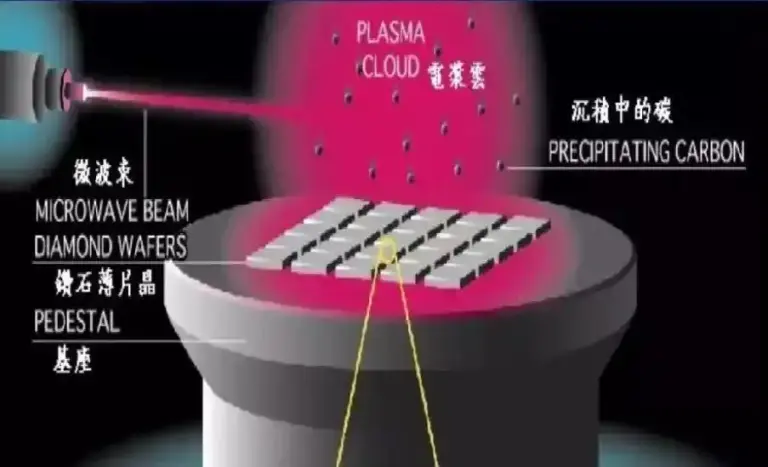
By using a natural or synthetic diamond as a seed crystal to grow layers of synthetic diamond, and by simulating the natural environment in which natural diamonds form, they are “planted” in a laboratory setting, much like seeds, and slowly develop and grow.
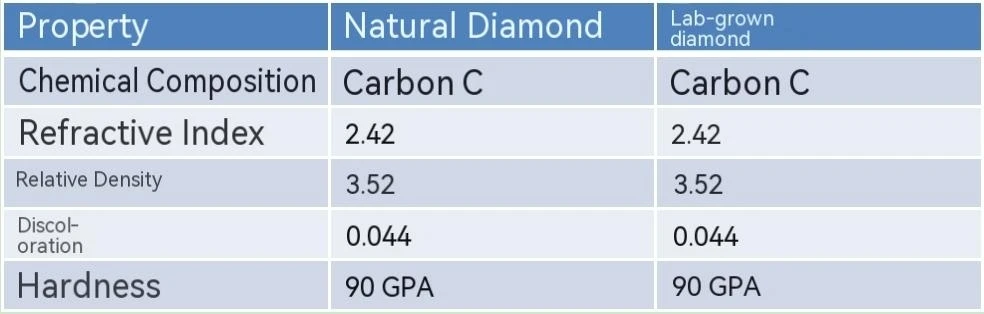
Both natural and lab-grown diamonds are crystals composed of pure carbon, and their crystal structures, physical properties, chemical properties, and optical properties are identical.
The Difference Between Lab-Grown Diamonds and Natural Diamonds—Formation Environment
As we mentioned earlier, lab-grown diamonds share the same physical, chemical, and optical properties as natural diamonds. So, are lab-grown diamonds real diamonds?
The lab-grown diamond industry often uses these analogies to answer this question: Lab-grown diamonds and natural diamonds are like greenhouse flowers and wildflowers—they are both flowers, but they grow in different environments.
Lab-grown diamonds and natural diamonds are like ice from the freezer and ice from nature—they are both ice, but they form in different environments…
The formation of natural diamonds requires billions of years of “refining.” Before a volcanic eruption, because the crater is often blocked, the scorching magma rising from a depth of approximately 150 to 200 kilometers within the Earth’s crust can only cool slowly within the crater. At this stage, the pressure on the pure carbon material reaches 4.5 to 6 × 10⁹ Pa. When the temperature drops to 1,000 to 1,250°C, it crystallizes, forming natural diamonds.
Only a few locations deep within the Earth possess the physical and chemical conditions necessary for diamond formation. This is the primary reason for the scarcity of natural diamonds.
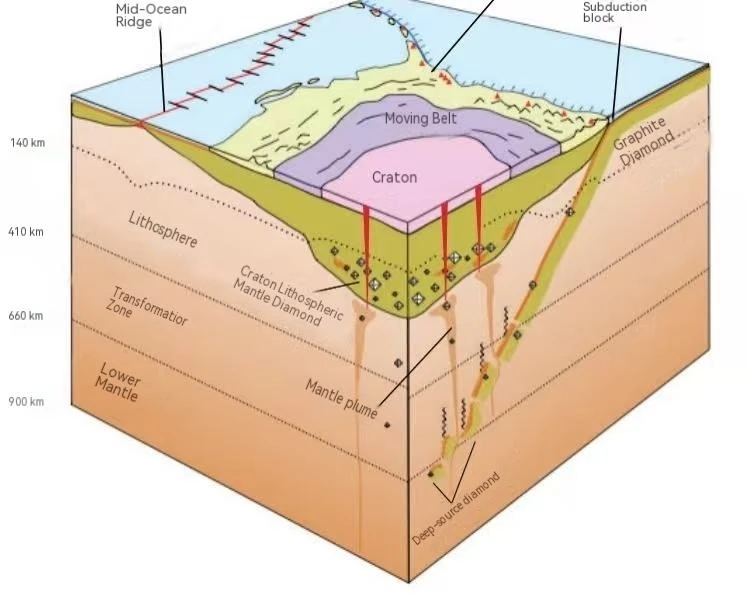
Because the conditions required for natural diamonds to form are extremely harsh, 98% of the world’s diamonds currently come from just eight countries.

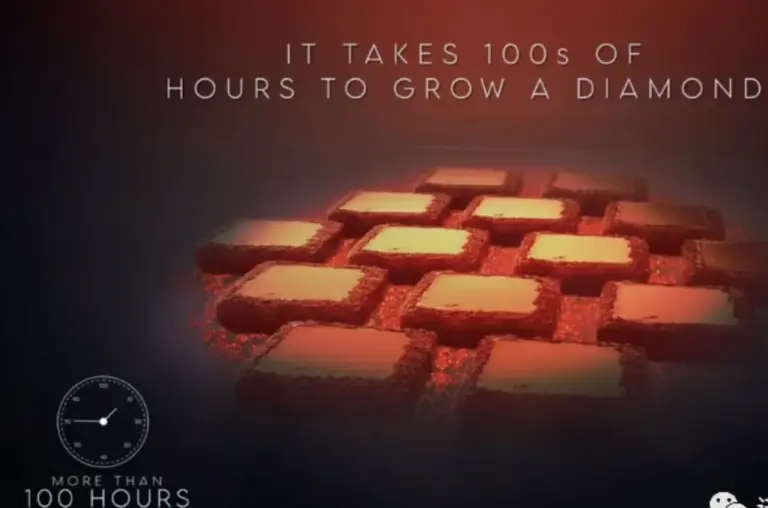
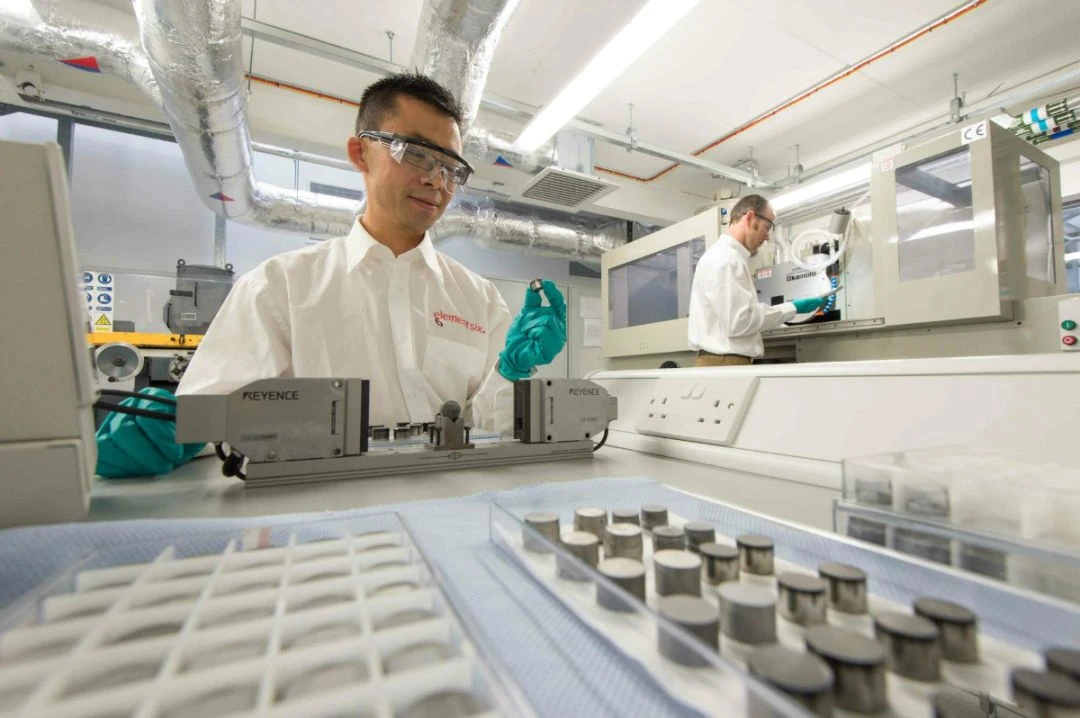
However, laboratories are now able to replicate the natural conditions in which diamonds form. Using HPHT (High-Pressure, High-Temperature) or CVD (Chemical Vapor Deposition) technology, they can produce gem-quality lab-grown diamonds in just a matter of weeks.
Do lab grown diamonds have a different name?
In addition to “lab-grown diamonds,” you may have also heard terms like “synthetic diamonds,” “man-made diamonds,” “artificial diamonds,” “moissanite,” and “rhinestones.” Are they all the same?
According to the definition in the Chinese national standard GB/T 16552-2017, Jewelry and Gemstones: Nomenclature, “synthetic gemstones” refer to crystalline, amorphous, or aggregate materials that are wholly or partially manufactured by human means and have known natural counterparts, with physical properties, chemical composition, and crystal structure that are essentially identical to those of the corresponding natural jewelry and gemstones.
“Lab-grown gemstones” are crystalline, amorphous, or aggregate materials manufactured by human means that have no known natural counterparts. According to this definition, the term “synthetic diamond” is the current designation used in national standards; since diamonds have a known natural counterpart, they are referred to as “synthetic.” In contrast, the term “lab-grown diamond” is not as standardized.
According to the definition in the Chinese national standard GB/T 16553-2017, Identification of Jewelry and Gemstones, “diamond” is the mineral name for “diamond.” While the term “synthetic/laboratory-grown diamond” is widely accepted in industrial applications, the jewelry industry rarely uses the term “diamond.”
So where does the term “lab-grown diamonds” come from?
The meaning of a term may vary across different linguistic systems. One definition states that “synthesis is a chemical reaction process in which multiple chemical precursors form more complex molecules.”
According to this definition, lab-grown diamonds are not “synthetic” because the growth process does not involve the creation of a complex molecule, nor does it require multiple chemical precursors to produce diamonds; rather, it simply transforms one form of elemental carbon (graphite) into another (diamond).
What makes diamonds unique is that they are the only gemstones not composed of complex molecules. Therefore, according to this theory, lab-grown diamonds are not considered synthetic;
However, lab-grown rubies, sapphires, or emeralds can be considered synthetic because they are created in a laboratory from various chemical precursors (as shown in the table below).
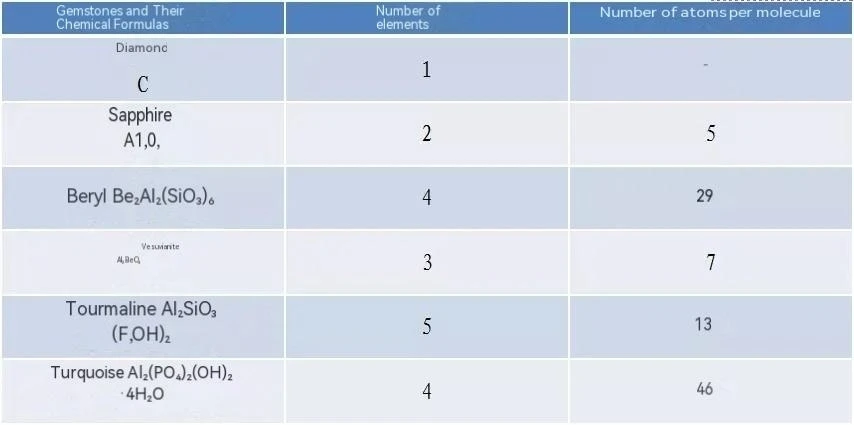
In addition, the U.S. Federal Trade Commission (FTC) revised its “Jewelry Guidelines” in July 2018, noting that the term “synthetic” is often associated with “counterfeit,” whereas lab-grown diamonds are not counterfeit; they possess optical, physical, and chemical properties that are identical to those of mined diamonds. Therefore, the FTC does not recommend using the term “synthetic” to describe lab-grown diamonds, but instead recommends using terms such as “laboratory-grown/created.” “laboratory-grown/created.”
With the release of the FTC’s guidelines, the industry has increasingly favored the term “laboratory-grown diamond.” In the Chinese context, the industry also prefers to use “cultured diamond” rather than “synthetic diamond” or “synthetic diamond.”
Perhaps the former better conveys the romantic qualities of diamonds and the sense of technological advancement brought about by laboratory techniques, while also implying the arduous nature of the diamond cultivation process—much like the growth of a seed, which must overcome numerous challenges to ultimately produce a beautiful fruit. To some extent, this also adds emotional value to lab-grown diamonds.
“Mimic diamonds” and ‘rhinestones’ are materials that have absolutely nothing to do with “diamonds.”
“Mossanite,” also known as “Mossanite,” has the chemical formula SiC (synthetic silicon carbide). It is a synthetic gemstone that exhibits excellent optical properties due to its high refractive index and high dispersion. In layman’s terms, this means it has a strong luster and intense fire, which is why it is often used as a diamond simulant.
“Rhinestones” generally refer to cubic zirconia (CZ), which is also a synthetic gemstone. Its refractive index and dispersion are similar to those of diamonds, but it is less hard than diamonds and may become scratched when worn.
The emergence of “Mimic Diamonds” and “Rhinestones” has greatly enriched the jewelry market and satisfied people’s pursuit of beauty, but in terms of value and cultural significance, they are far less precious than diamonds.
How can you tell if the diamond you’re buying is a lab-grown diamond?
There is currently no consensus on the terminology used to describe lab-grown diamonds within the international and domestic industries.
In its 2018 revised guidelines, the U.S. Federal Trade Commission (FTC) expanded the definition of “diamond,” stating that the term encompasses both ‘mined’ and “synthetically produced” diamonds.
The “CJA Guidelines for Advertising Lab-Grown Diamonds (LGD),” published by the Canadian Jewellers Association (CJA) in March 2020, stipulate that non-natural materials must be clearly identified, and terms such as “synthetic,” “lab-grown,” or “lab-created” must immediately precede the word “diamond” and must not be separated from it.
In early 2020, the World Jewellery Confederation (CIBJO) released the Guide to Lab-Grown Diamonds (Draft for Comment) to the industry, stating that “lab-grown diamonds,” “lab-created diamonds,” and “synthetic diamonds” are all synonyms. While “synthetic” is not the preferred modifier, it remains a valid term, whereas the unqualified term “diamond” refers exclusively to natural diamonds.
How can you tell if the diamond you’re buying is lab-grown? Although there is no standardized terminology yet, the industry generally agrees that it should be clearly disclosed to consumers whether a diamond is “lab-grown.” Consumers can rely on authoritative reports from third-party certification and testing agencies to make this determination.
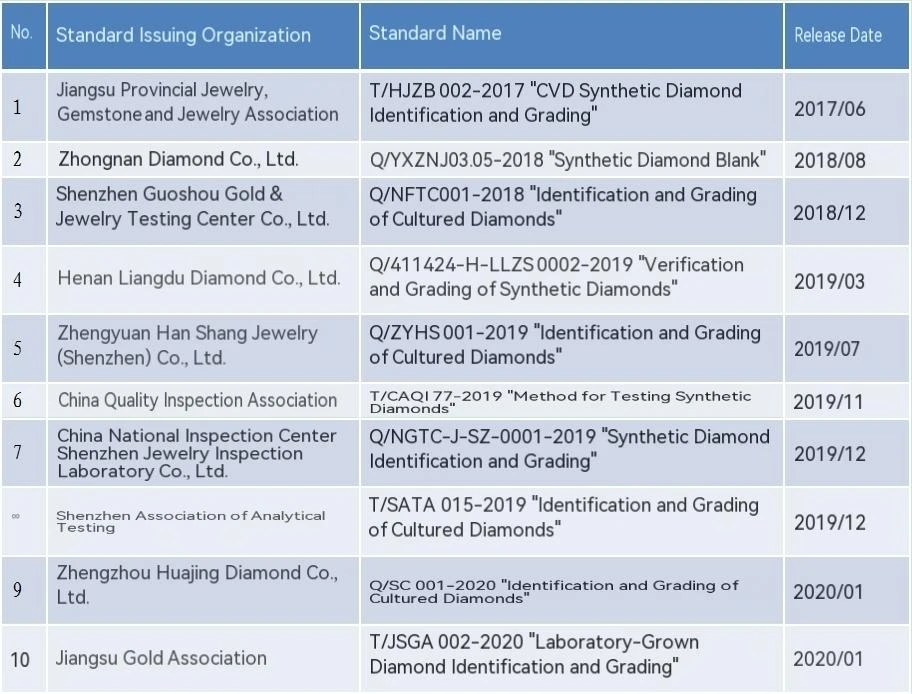
Currently, testing organizations, industry associations, and leading companies in China have established corresponding standards to provide a basis for the identification and grading of lab-grown diamonds.
Note: The letter “T” in the name stands for “group standard,” and ‘Q’ stands for “enterprise standard.”
In August 2018, CTI Huace Gemological Laboratory issued China’s first “Laboratory-Grown Diamond Report” for the lab-grown diamond brand CARAXY, providing identification and grading data for a blue lab-grown diamond ring.
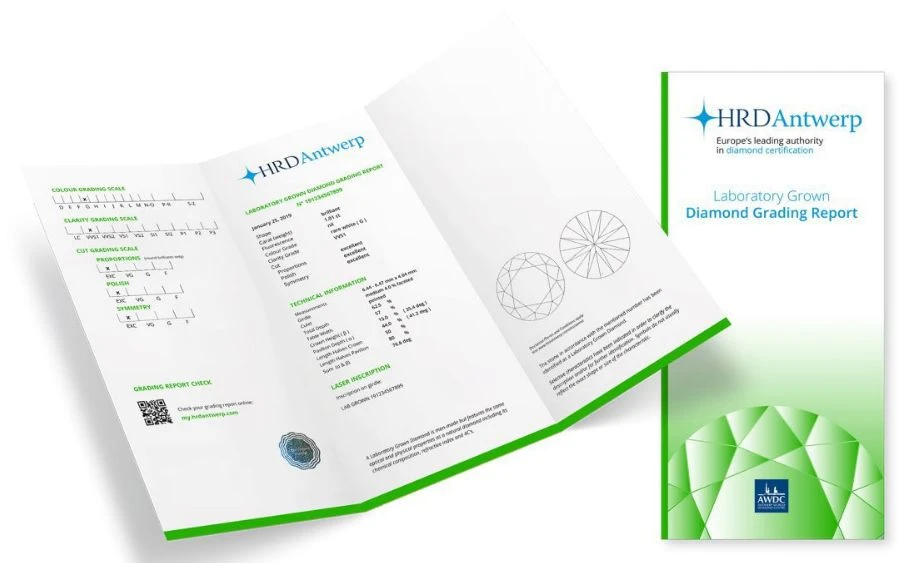
Leading international laboratories have also made corresponding revisions to their lab-grown diamond reports. In March 2019, HRD Antwerp introduced a new version of its lab-grown diamond report, aligning the grading descriptions with those for natural diamonds and expanding the color grading range for lab-grown diamonds.
In April 2019, the Gemological Institute of America (GIA) announced that it would replace the term “synthetic diamond” with “laboratory-grown diamond” to align with the Federal Trade Commission’s (FTC) latest guidelines.
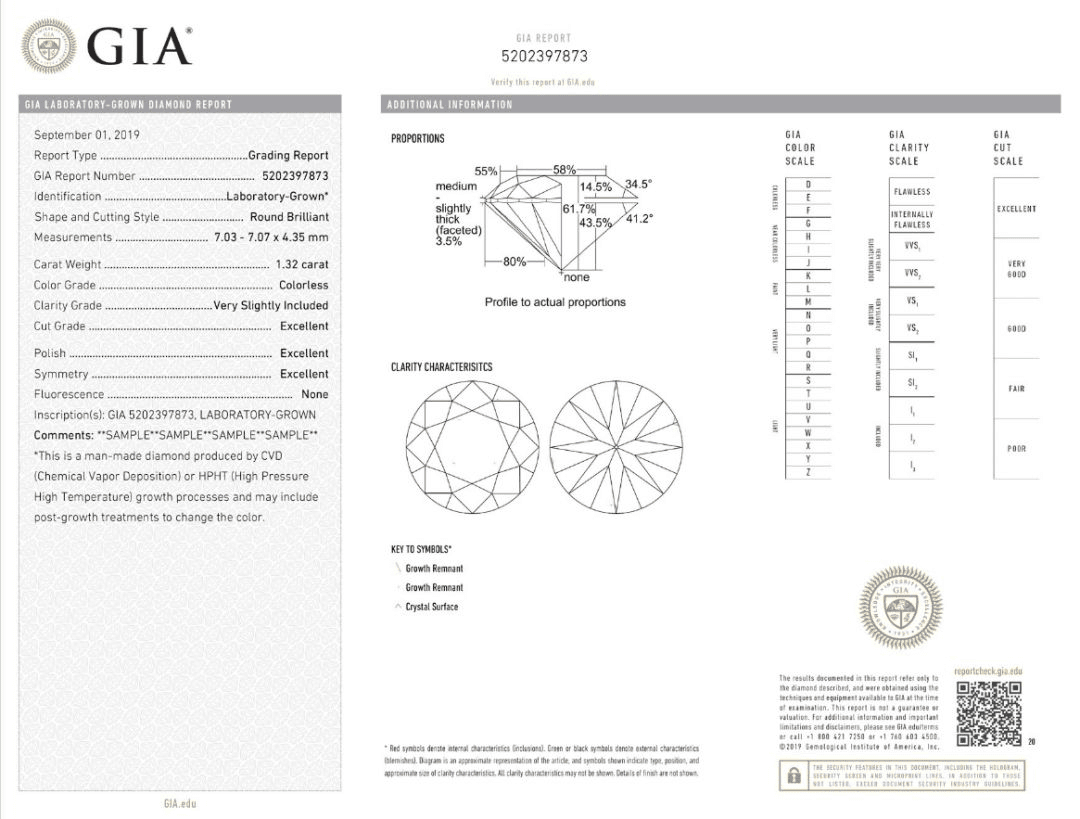
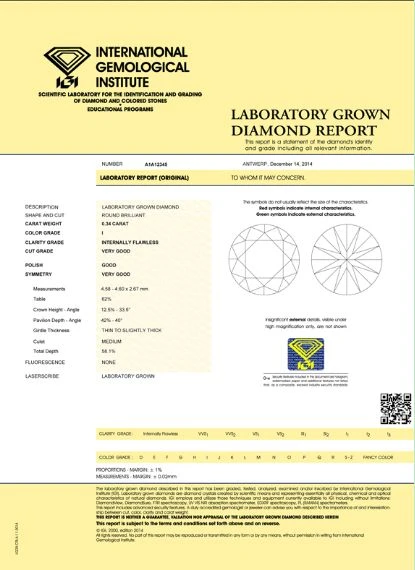
Reports issued by the International Gemological Institute (IGI) use the term “laboratory-grown diamond.”
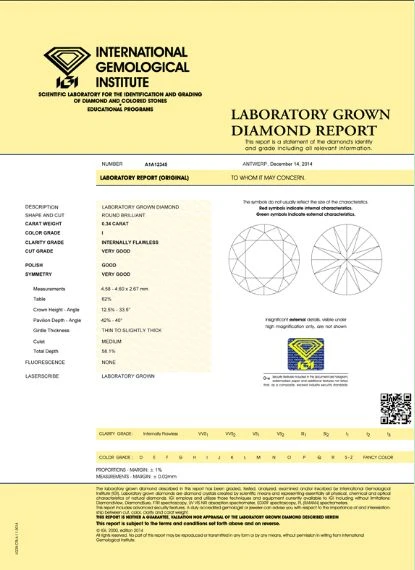
Reports issued by the International Gemological Institute (IGI) use the term “laboratory-grown diamond.”
In March 2020, GSI (Gemological Science International) launched its new lab-grown diamond report, the LGX Complete™, which provides further information on the optimization treatments applied to lab-grown diamonds.
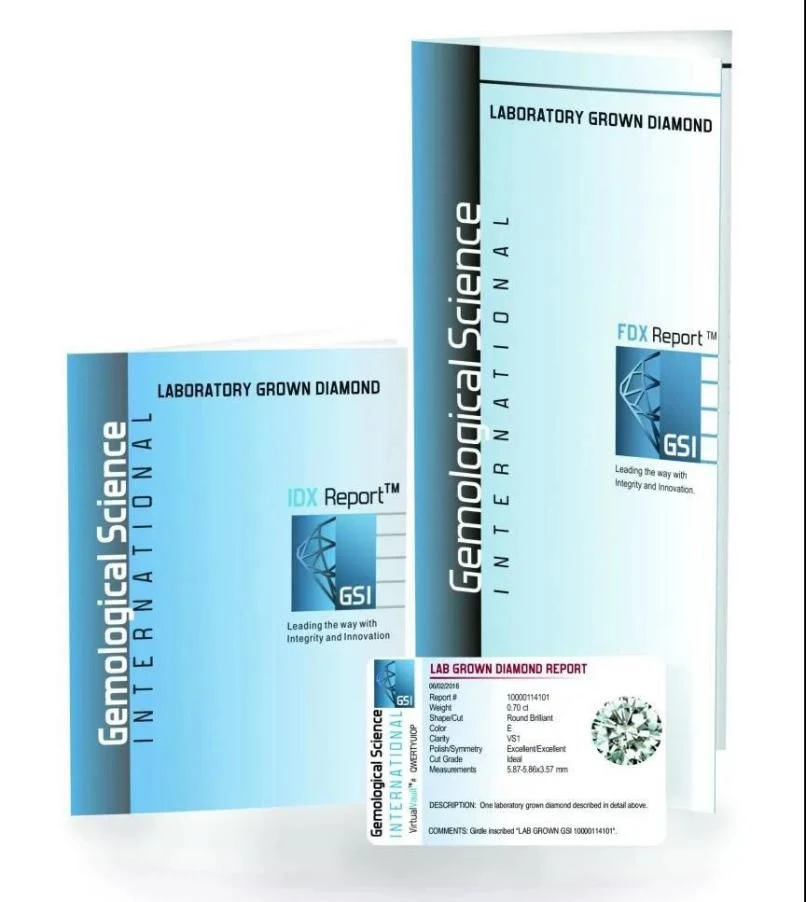
As can be seen, all professional and authoritative third-party testing organizations are capable of issuing grading certificates, and they all disclose in these certificates whether the stone is a diamond, and whether it is a “naturally mined diamond” or a “lab-grown diamond.”
With the backing of authoritative laboratories and organizations, lab-grown diamonds are becoming increasingly accepted by the public, and many socialites and celebrities have worn them on important occasions.
Celebrities’ Views on Lab-Grown Diamonds
Gal Gadot On January 24, 2019, Gal Gadot attended the Los Angeles premiere of I Am the Night, wearing emerald-cut lab-grown diamond earrings.

Brie Larson On April 15, 2019, Brie Larson wore lab-grown diamond earrings at the premiere of Avengers: Endgame in South Korea.

Taylor Swift On June 17, 2019, the music video for Taylor Swift’s new single “You Need To Calm Down” was released. In it, she wore a pair of custom-designed heart-shaped earrings—“Love Heart Hoop Earrings”—created by London-based jewelry designer Anabela Chan, featuring pink, canary yellow, and white lab-grown diamonds.