Is it worth buying a lab-grown diamond ring
Many friends are wondering: Is it worth buying a lab-grown diamond ring? When it comes to this question, my opinion is that it mainly depends on personal acceptance. If you can accept lab-grown diamonds and want to buy a larger diamond at a lower cost, then a lab-grown diamond ring is definitely worth buying.
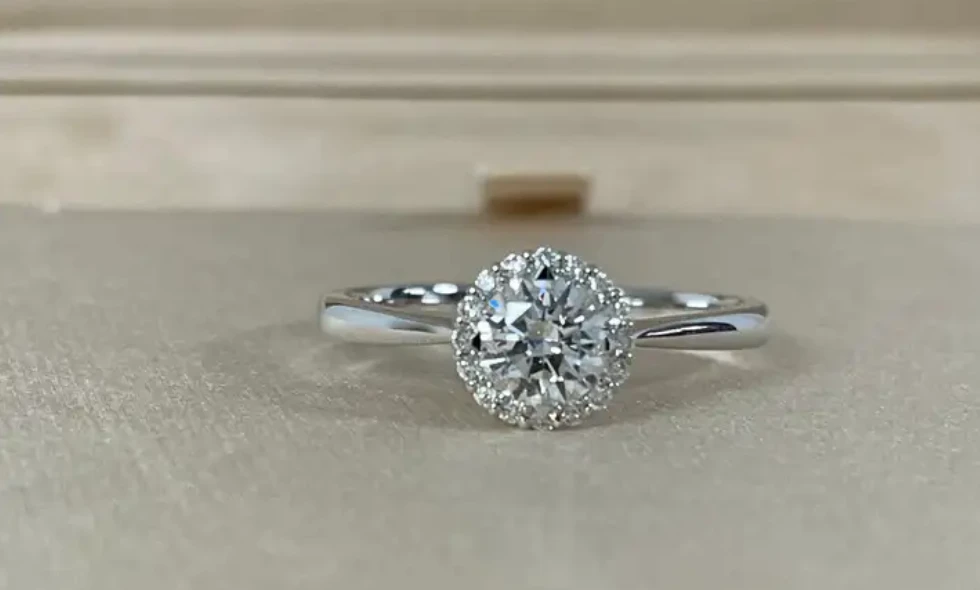
First, let’s get to know lab-grown diamonds
A lab-grown diamond is an artificially synthesized diamond, also known as a laboratory diamond by some people. As the name suggests, “cultivated” means “artificially cultivated diamond”, or simply synthetic diamond.
Some consumers may think that lab-grown diamonds are fake. Because in many people’s minds, as long as a gemstone is artificially synthesized, it is fake, and only natural gemstones are “real”. In fact, lab-grown diamonds have the same physical and chemical properties as natural diamonds; the only difference is that they are synthesized through artificial means.
The International Gemological Institute (IGI): A world-leading gemstone certification body, IGI pioneered the lab-grown diamond grading system in 2005, explicitly recognizing lab-grown diamonds as genuine diamonds.
It applies the same 4C grading standards (cut, color, clarity, and carat weight) to both lab-grown and natural diamonds. As an ISO 17025-accredited organization, IGI ensures the professionalism and accuracy of its grading, and the lab-grown diamond certificates it issues are recognized worldwide.
The main advantage of lab-grown diamonds is their affordability. In fact, their structural composition, fire, hardness, and other characteristics are exactly the same as those of natural diamonds—they cannot be distinguished by the naked eye at all. So, is it worth buying a lab-grown diamond ring? For those who pursue diamond beauty without overspending, the answer is obvious.
Differentiation can only be done through laboratory instruments, such as using a DiamondView to observe differences in growth lines, a UV-visible spectrophotometer to check differences in absorption spectra, or an infrared spectrometer to detect variations in internal trace elements. All these identification methods are at the microscopic level. For wearing purposes, lab-grown diamonds have the same effect as natural diamonds, making a lab-grown diamond ring a practical choice.
How are lab-grown diamonds synthesized?
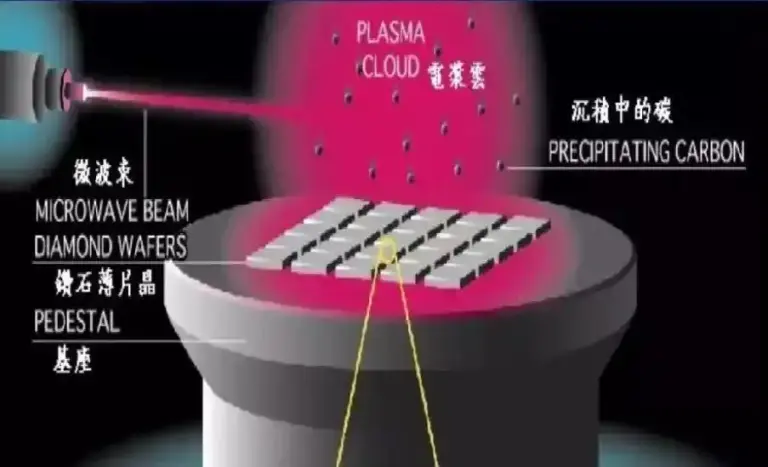
Simply put, laboratory equipment is used to simulate the natural diamond formation process, allowing carbon molecules to form the molecular structure of diamond in a short period of time.
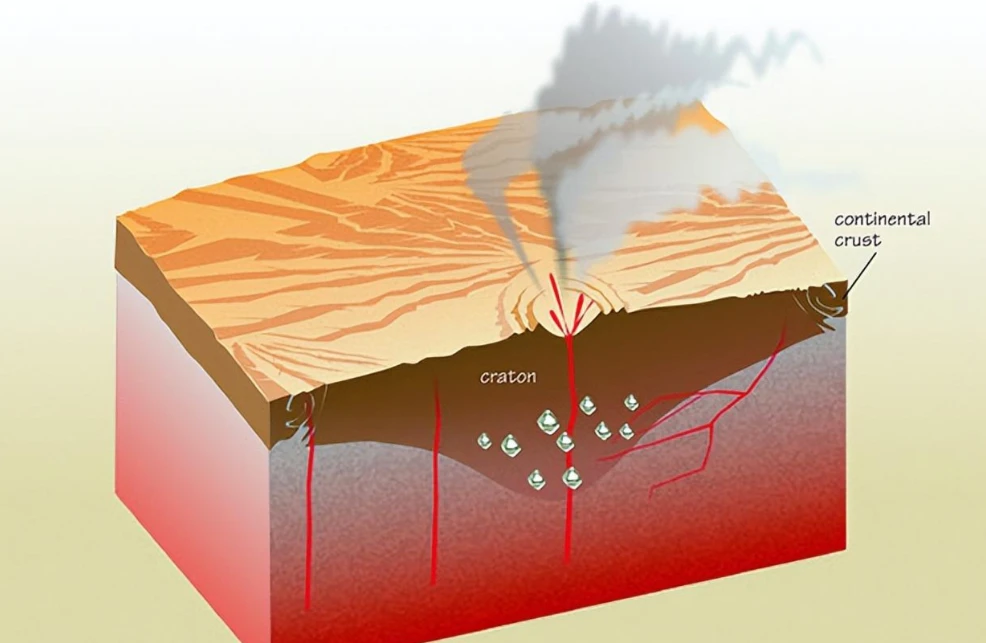
Currently, it takes about 15 days to synthesize the rough stone for a 1-carat cut lab-grown diamond. In contrast, it may take thousands of years for a high-quality 1-carat natural diamond to form in the earth’s crust. High-quality natural diamonds are relatively scarce; from a global perspective, it is difficult to find high-quality natural diamonds.
In addition, the high price of natural diamonds is closely related to the commercial operations of major international companies. In particular, the company you may be familiar with has associated natural diamonds with love, pushing their commercial value to the extreme and simultaneously driving up the price of natural diamonds to extremely high levels. This makes many consumers wonder again: Is it worth buying a lab-grown diamond ring? When you can get the same beauty at a lower price, the answer becomes clearer.
Lab-grown diamond production technology
Currently, there are two main types of lab-grown diamond technologies: HPHT (High Pressure High Temperature) and CVD (Chemical Vapor Deposition).
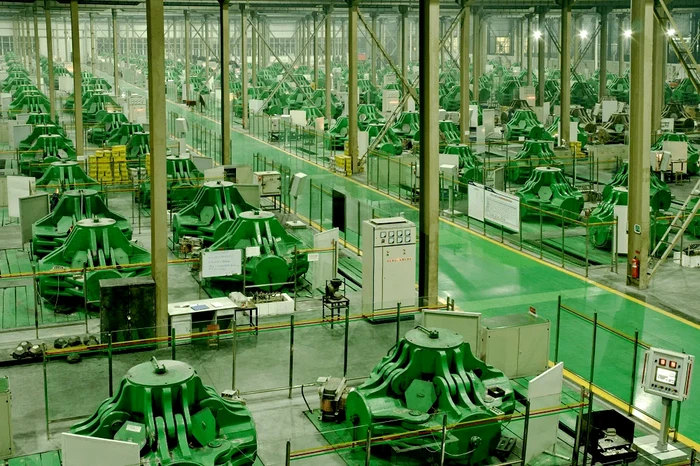
- HPHT lab-grown diamonds mainly have a granular structure and are more suitable for synthesizing large-carat lab-grown diamonds.
- CVD lab-grown diamonds mainly have a flaky structure and are mostly used for synthesizing small-carat lab-grown diamonds, such as those under 2 carats. There is no distinction between good and bad between the two methods; each has its own advantages and disadvantages, and overall they are similar. Their wholesale prices in the market are also the same. Therefore, there is no need to worry about which method is used to synthesize the lab-grown diamond—just check the IGI certificate to determine its quality. After all, when considering Is it worth buying a lab-grown diamond ring?, quality is key, not the synthesis method.
- Some synthetic diamonds may undergo further color modification after synthesis. For example, heat treatment can further improve the color grade, which will be noted on the IGI certificate. Some merchants claim that color-modified lab-grown diamonds are not good, which is just creating anxiety. Since all lab-grown diamonds are synthetic, there is no need to care about whether they have been color-modified. Color modification is an optimization process that improves the diamond’s quality.
Price difference between lab-grown diamonds and natural diamonds
A 0.5-carat natural diamond requires a budget of more than 2,000 US dollars. A 0.6-carat natural diamond costs about 2,200-2,400 US dollars. A 1-carat natural diamond ranges from 5,700-8,500 US dollars. A 1.5-carat natural diamond costs approximately 12,800-21,000 US dollars, and a 2-carat natural diamond is around 21,000-35,000 US dollars.
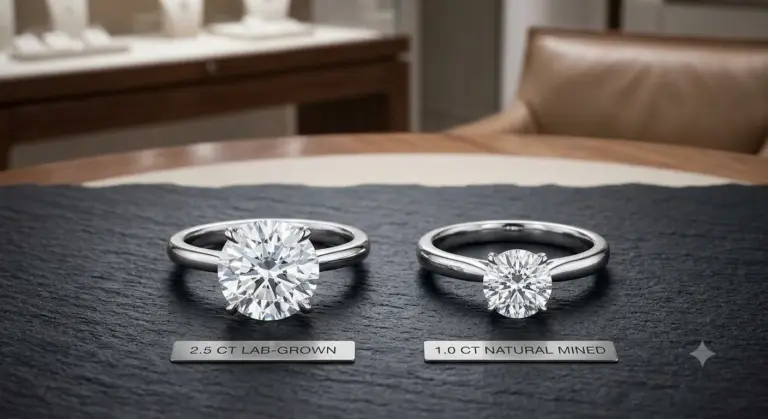
In contrast, lab-grown diamonds are much cheaper than natural diamonds. If you choose a lab-grown diamond ring, the price of a lab-grown diamond ring of the same carat will not exceed half of the price of a natural diamond of the same carat, or even lower. Therefore, lab-grown diamonds allow you to buy a larger diamond at a lower cost. Compared with natural diamonds of the same carat size, lab-grown diamond rings are much cheaper, helping you save your budget.
Generally speaking, there is no need to buy too large a lab-grown diamond. A 1-carat to 3-carat lab-grown diamond is sufficient—it just needs to suit you. If you buy a too large lab-grown diamond, it will look exaggerated, and others may think it is fake. Although lab-grown diamonds are synthetic gemstones, buying a large-carat one will still cost a lot of money, which is not very necessary. Choosing a 1-carat to 3-carat lab-grown diamond to customize a ring is almost perfect.
Currently, there are no major well-known brands for lab-grown diamonds, because lab-grown diamonds have only developed gradually in recent years and have not yet formed very large brands.
Lab-grown diamonds are mostly concentrated in small brands. In China, the development of lab-grown diamonds is very rapid, and many jewelry brands specializing in lab-grown diamond jewelry have emerged. We can see that although these brands have not yet gained much international fame, their quality is very good. Many friends who have received lab-grown diamond rings and other products feel very amazed.
Moreover, as long as a piece of jewelry is from a brand, its price will not be cheap, with a high premium—and lab-grown diamonds are no exception. The reason we buy lab-grown diamonds is to get a good deal. To buy a lab-grown diamond ring at a low price, we highly recommend you to learn more about the development of lab-grown diamonds in China, or search for keywords such as “lab-grown diamond ring” on Google to find Chinese lab-grown diamond manufacturers to place an order. You may receive a pleasant surprise!
Is it worth buying a lab-grown diamond ring
Let’s return to the question: Is it worth buying a lab-grown diamond ring? In fact, for personal wear, a lab-grown diamond is definitely worth buying. After all, you can get a larger diamond at a lower cost. Moreover, when you wear it, if you don’t mention that it is a lab-grown diamond, no one can identify it as a lab-grown diamond just by the naked eye.
However, if you want to buy a diamond ring for a proposal, you need to figure out whether your partner can accept a lab-grown diamond.
Some girls cannot accept a lab-grown diamond for a proposal; they prefer natural gemstones for proposals. Of course, if they don’t know much about lab-grown diamonds, you can share the content of this article with them. Maybe they will have a new understanding of lab-grown diamonds. Anyway, lab-grown diamonds can save you money, and you can use the saved money for anything—it’s a good choice!