61% Market Shift: Why Lab-Grown Diamonds are Taking Over the Engagement Ring Market
A recent 2025 consumer report by The Knot dropped a bombshell figure that has sent shockwaves through the natural diamond industry:
61%.
In the U.S. engagement ring market, a staggering 61% of couples chose lab-grown diamonds in 2025. To put this in perspective, that number was less than 10% back in 2020.
A jump from 10% to 61% in just five years isn’t just growth—it is a total market takeover. This rapid surge has completely redefined the lab-grown diamond engagement ring market share in the global jewelry industry.
Who is Buying Lab-Created Engagement Rings?
The report highlights several fascinating shifts in modern consumer behavior:
A Defining Generational Divide
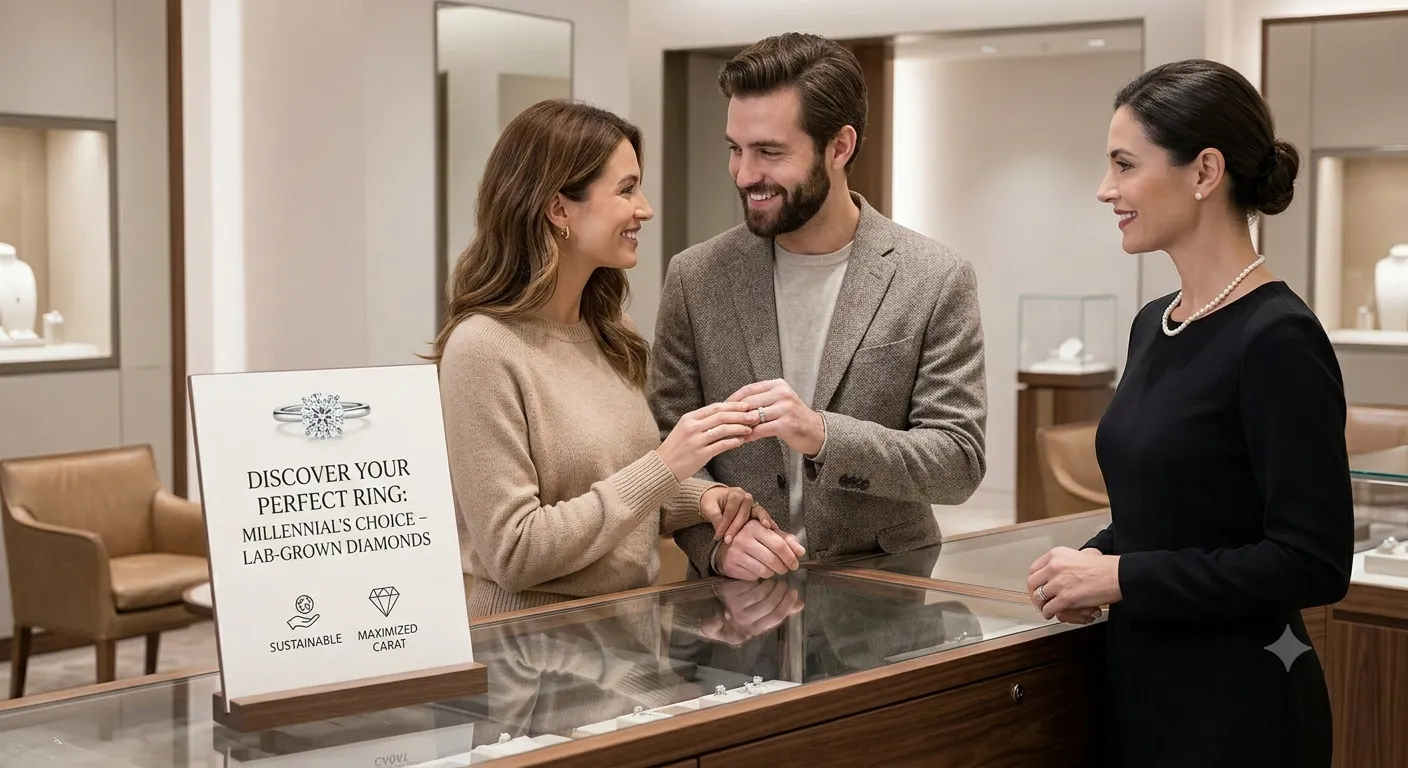
The age split is crystal clear. Among brides aged 25 to 34, the adoption rate of lab-grown diamonds exceeds 70%. Meanwhile, natural diamonds still hold the majority for buyers over 35. This indicates that lab-grown diamonds are not merely fighting for the existing market share of natural diamonds; they are capturing the entire next generation of consumers.
Maximizing Carat Size over Status
Budget is no longer the sole driving factor. Couples choosing lab-created stones aren’t spending significantly less than those buying natural ones. It is not a matter of “buying lab-grown because they can’t afford natural”; rather, it’s “getting a much bigger diamond for the exact same budget.”
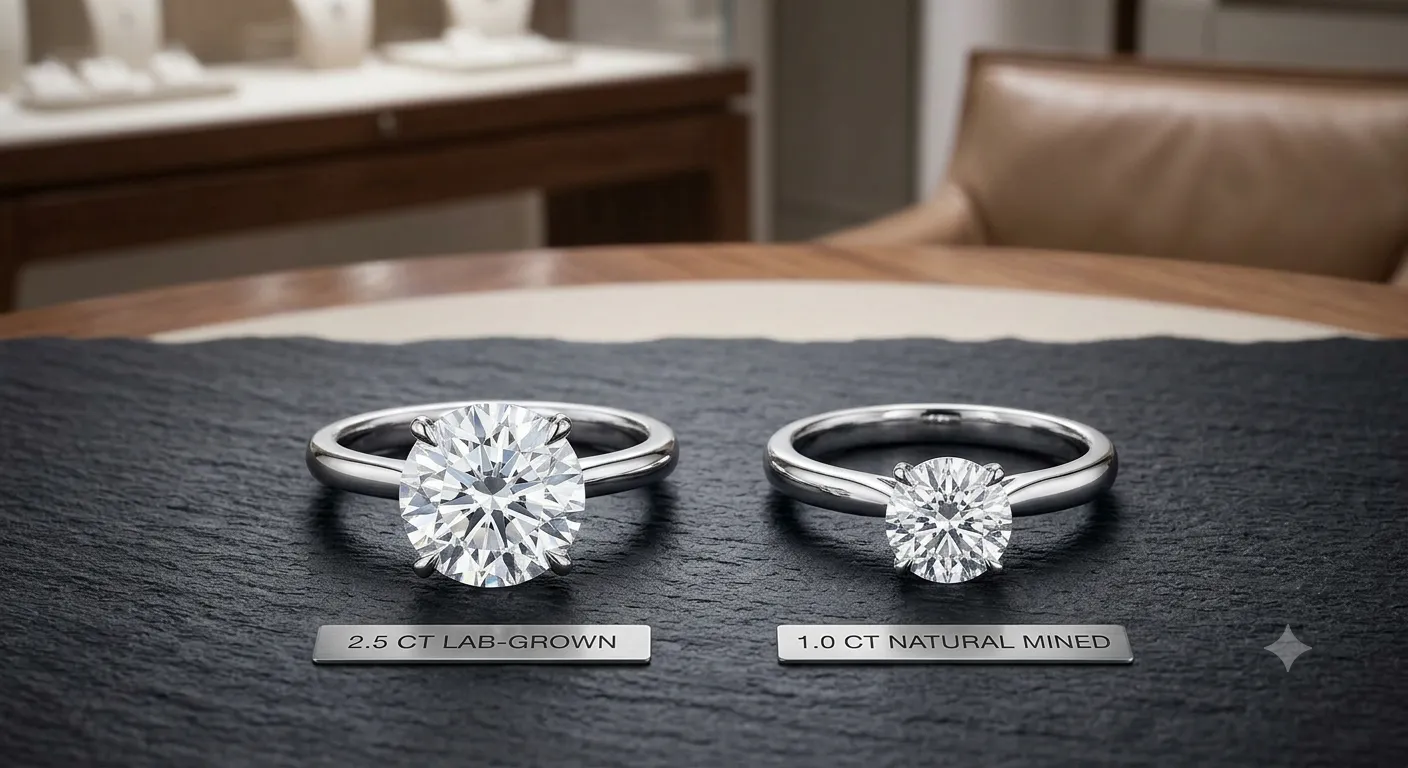
A budget that secures a 1-carat natural diamond can easily afford a 2-to-3-carat, top-tier lab-grown diamond. This isn’t about saving money—it’s an upgrade. This mentality explains why couples are choosing lab-grown diamonds over natural options.
Male Buyers are Driving the Trend
Data shows that men tend to favor lab-grown diamonds during the wedding ring decision-making process. The logic is simple: for the same price, the visual impact is doubled. During a proposal, the size of the diamond is immediately visible to the naked eye, whereas the origin—whether mined or lab-created—is indistinguishable without professional equipment.
Why the Mined Diamond Industry is Panicking
The anxiety in the natural diamond sector isn’t just about losing immediate sales; it’s about an irreversible shift in consumer psychology.
For decades, the natural diamond narrative was built entirely on “A Diamond is Forever,” resting on two pillars: scarcity and resale value. Lab-grown diamonds have fundamentally shattered both.
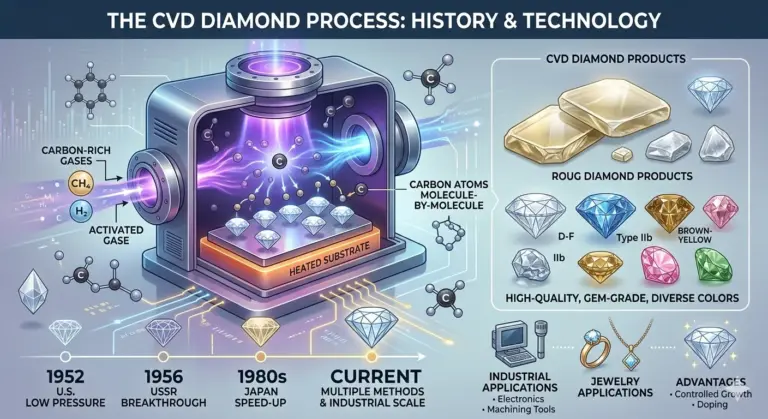
- Scarcity? Laboratories can produce high-quality stones on demand, using CVD and HPHT manufacturing methods, and as technology advances, production costs continue to fall.
- Resale Value? While the secondary market for lab-grown diamonds is weaker than that for natural ones, the real question is: How many people actually buy an engagement ring with the intention of selling it? An engagement ring is a sentimental luxury consumer good, not an investment portfolio. Once consumers realize this, the “investment” argument loses its grip.
The mined diamond industry is no longer figuring out “how to win back market share,” but rather “how to reinvent their own identity.”
The Next Frontier: The Chinese Market
With the U.S. market crossing the 61% threshold, what lies ahead for China?
Currently, the penetration rate of lab-grown wedding rings in China is much lower, sitting around 10% to 15%. However, this isn’t due to a lack of interest, but rather a gap in market education. Chinese consumers’ perception of diamonds has been deeply shaped by De Beers’ decades-long marketing framework: “Diamond = Love = Natural = Expensive.”
But the tides are turning. Domestic jewelry giants like Chow Tai Fook, Chow Sang Sang, and DR are actively launching lab-grown product lines. Concurrently, lab-diamond content on platforms like Xiaohongshu (RED) has exploded. Once young Chinese consumers realize they can get a stone three times larger for the same price, the scales will tip rapidly.
I predict that China’s lab-grown engagement ring penetration will surge from 15% to over 40% within the next three years—driven not just by marketing, but by the closing of the information gap.
Final Thoughts from a Jewelry Insider
Crossing 61% is not a finish line; it is a new baseline.
When an alternative product captures over 50% of the wedding market, it ceases to be an “alternative” and officially becomes the mainstream choice. Mainstream choices no longer need to justify their existence. It is much like the electric vehicle (EV) market—once EV adoption crossed a critical percentage, people stopped asking, “Why didn’t you buy a gas car?”
The next phase for the lab-grown industry isn’t about engaging in price wars, but about building independent brand narratives. Pandora is leaning into sustainability, Lightbox focuses on fashion-forward styling, and Titan focuses on cultural heritage. There is a path to success for every strategy.
For the consumer, this shift is undeniably a win. With more choices and transparent information, every dollar spent simply delivers more value.
What about you? Would you choose a lab-grown or a natural diamond for your engagement ring? Let’s discuss in the comments below.