The Knot: Lab-grown diamond rings account for 61% of the U.S. market
Lab-grown diamond rings account for 61% of the U.S. market! I wonder what you’ll think when you see this number?
According to The Knot’s “2026 Real Weddings Study,” the U.S. wedding ring market is undergoing a profound transformation.
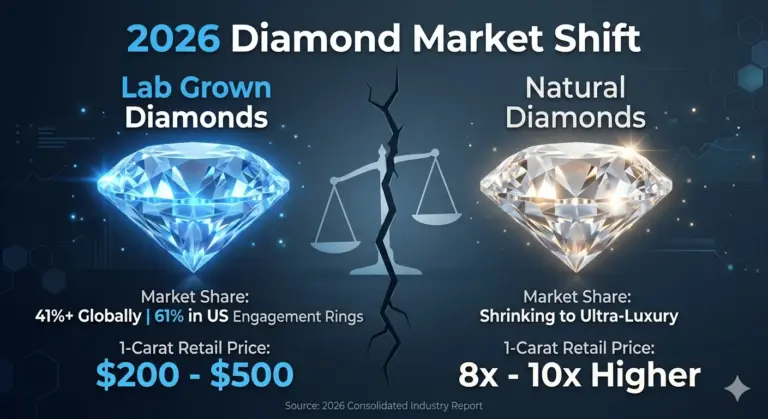
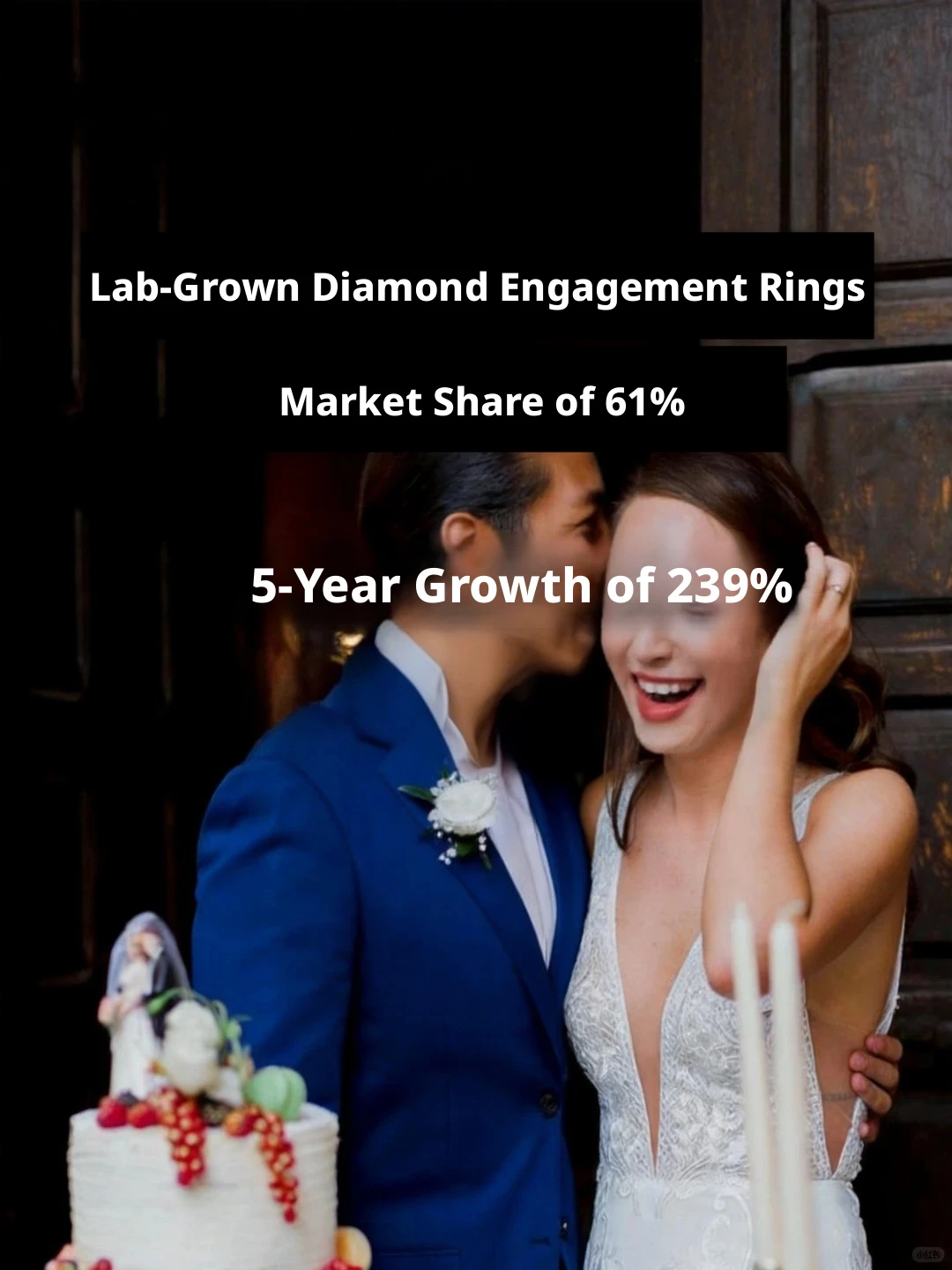
In 2025, lab-grown diamond rings accounted for 61% of the market—a 239% increase from 2020—marking their transition from a niche segment to the mainstream.
The primary driver of this shift is price competitiveness. Data shows that in 2025, consumers spent an average of $4,600 on engagement rings, a 11.5% decrease from 2024. However, the average carat weight rose from 1.7 carats to 1.9 carats.
Specifically, the average cost of a natural diamond engagement ring is $7,000, with an average diamond weight of 1.6 carats, while the average cost of a lab-grown diamond ring is $4,300, with an average diamond weight of 2 carats.
The consumer choice of “spending less and getting more” has broken with traditional patterns.
An even deeper driving force is the evolving values of young people. The report shows that 40% of couples believe that whether a diamond is lab-grown or natural is not particularly important.
Consumers no longer equate “natural” with “precious,” but are redefining the value of diamonds—based on emotional significance rather than how they were mined.
This shift reflects the challenge that a new generation of consumers is posing to traditional consumption patterns.
The perceived quality of lab-grown diamonds is also on the rise. 83% of consumers opt for colorless diamonds, and 88% choose custom designs; round cuts account for 26% and oval cuts for 25%, while gold settings make up 39% of the market and have seen a 140% increase over the past five years.
These figures indicate that lab-grown diamond consumers also prioritize high quality and personalization.
This transformation is having a profound impact on the jewelry industry. Lab-grown diamonds are gradually breaking the price monopoly held by traditional diamonds, prompting the industry to reevaluate transparency and sustainability, and fostering healthy competition.
In the long run, the healthy development of the lab-grown diamond market will benefit more consumers, allowing them to purchase diamonds that are just as brilliant and symbolize the same enduring love at lower prices. As a result, the optimization of the market structure itself represents progress.