Lab Grown Diamond Price Trends: The 2026 Market Divide
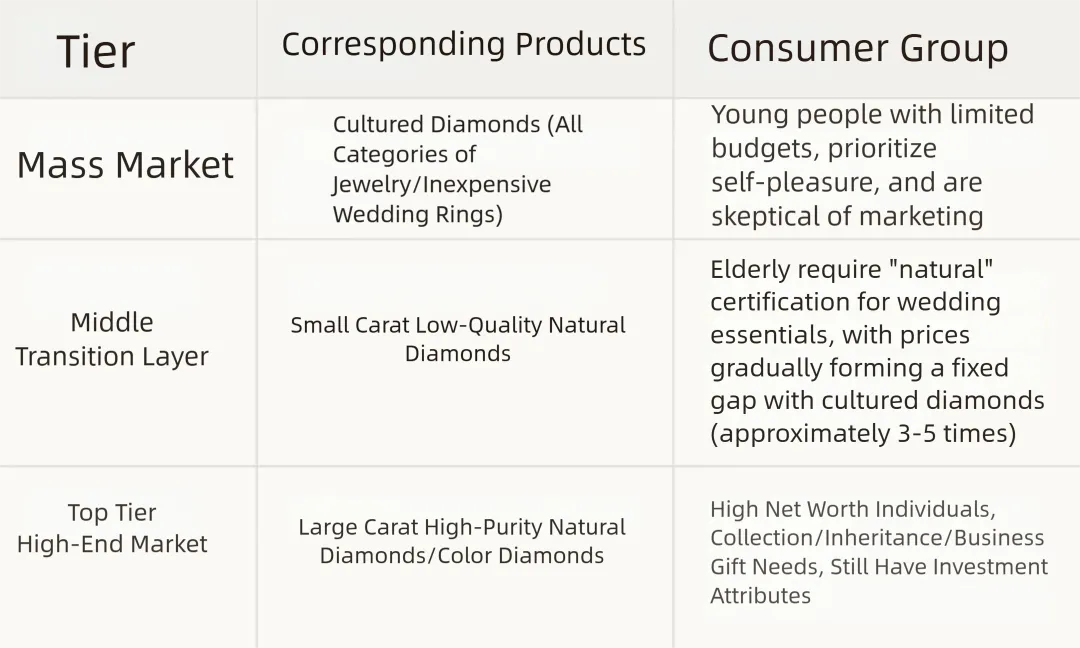
The current competitive landscape between lab-grown and natural diamonds can be summarized in a single sentence: It is no longer an adversarial relationship of “real vs. fake substitution,” but rather a coexistence defined by “structural stratification and scenario diversification.”
Driven by shifting consumer mindsets, this evolution has completely split the diamond market into two distinct tracks.
The Core Market Fundamentals (Latest 2025-2026 Data)
According to comprehensive data from the Lab-Grown Diamond Network and major industry media outlets, current price trends for lab-grown diamonds have triggered significant shifts in global market share:
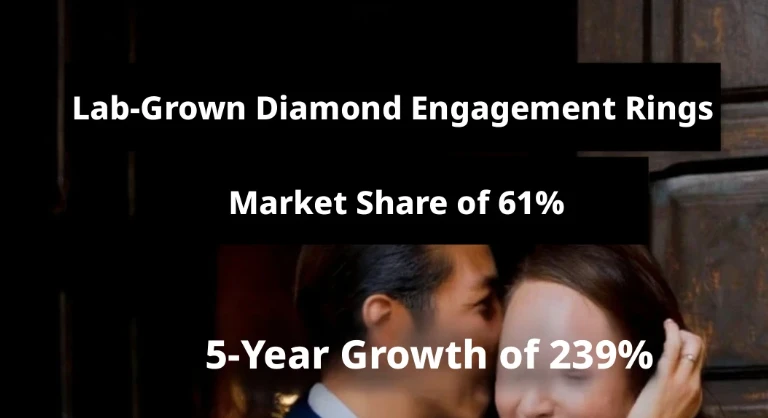
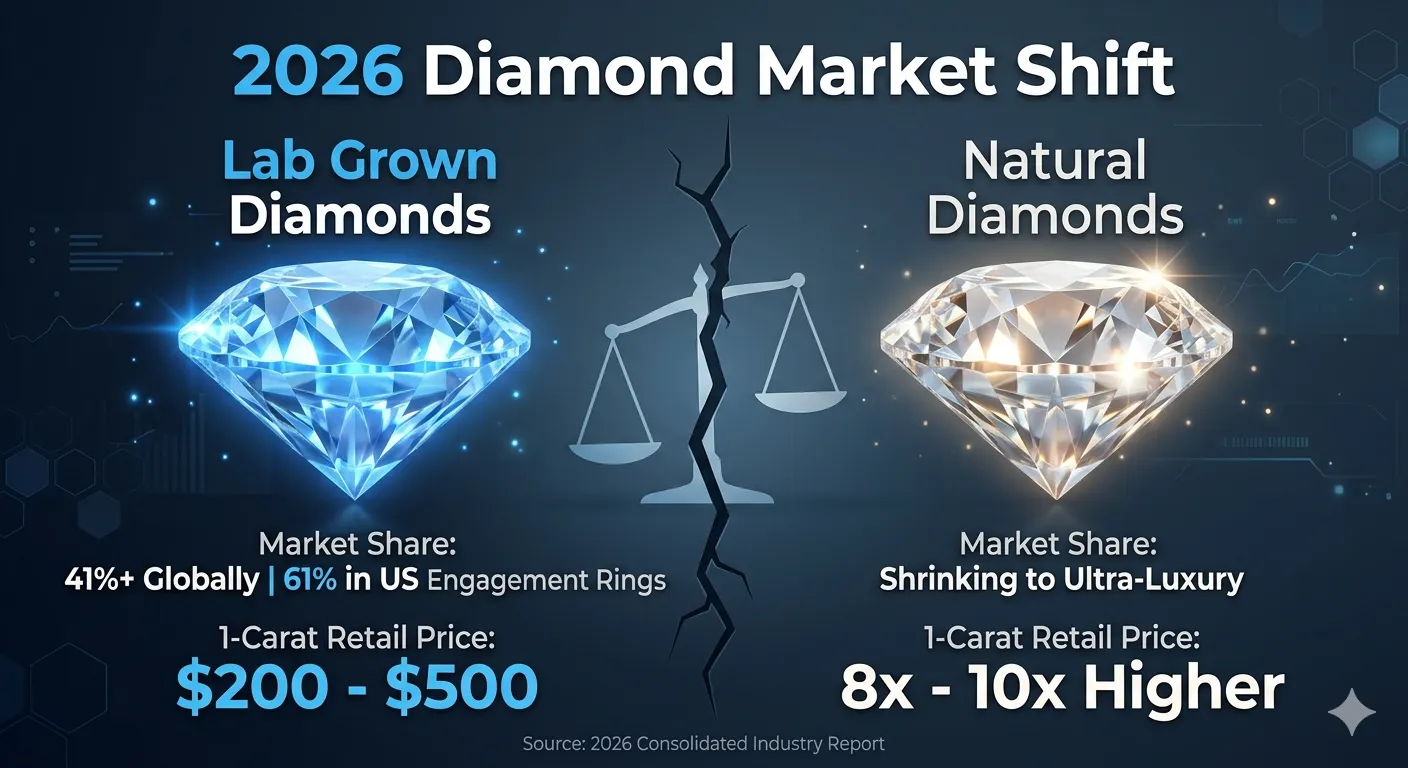
- Market Share Surge: Lab-grown varieties now account for over 40% of global diamond sales. In the U.S. engagement ring market, the share of man-made gems has skyrocketed to 61%, representing a 239% increase compared to five years ago.
- The Widening Price Chasm: Recent lab grown diamond price trends show an unprecedented gap compared to mined stones. A high-quality, 1-carat lab gem with identical specifications retails for just $200–$500 (approx. 1,500–3,500 RMB)—only 1/8 to 1/10 the price of its natural counterpart. At the wholesale level, it drops to as low as 1/60.
- Natural Diamonds Retreat to Ultra-Luxury: The prices of investment-grade natural stones (above 3 carats with high clarity) remain resilient, growing steadily at 2-3% annually. Conversely, entry-level natural melee diamonds (under 1 carat) have seen their value plummet by over 20% over the past four years, completely crowded out of the mass consumer market by affordable lab alternatives.
Market Segments: Core Scenarios and Competitive Boundaries
Lab-Grown Diamonds Secure Three Core Scenarios: Accessories, Self-Reward, and High Value
The downward lab grown diamond price trends have successfully captured consumers looking for fashion-forward, self-rewarding, and budget-friendly options:
- The Budget-Friendly Wedding Alternative: Gen Z has become disillusioned with the traditional marketing narrative linking diamonds to eternal love. Over 70% of young consumers state that their primary motivation is “getting 2 to 3 times the carat size for the same budget.” They prefer spending the savings on travel or down payments.
- Daily Wear and Self-Reward: Moving fully into the fast-fashion track, these gems offer rapid style updates and low entry prices. Consumers can buy sparkling accessories for a few hundred dollars. Furthermore, the “eco-friendly and conflict-free” label strongly appeals to ESG-conscious buyers.
- Low-Cost Customization: With China’s Henan province serving as the manufacturing hub (producing 50% of the world’s supply), custom diamond studios in places like Shuibei, Shenzhen, have become the top choice for youth buying engagement rings. A complete 1-carat custom ring can be purchased for around $700 (5,000 RMB).
The Major Drawback: Despite attractive retail lab grown diamond price trends, these stones lack inherent scarcity and hold virtually no resale or trade-in value in the secondary market. While natural diamonds can be resold for 10-30% of their original price, lab-grown alternatives fetch less than 10% of their retail value upon resale.
Natural Diamonds Retreat to High-End Emotion, Heritage, and Investment
Major players in the natural mining industry, led by De Beers, have completely abandoned price wars in response to aggressive lab grown diamond price trends. Instead, they have pivoted toward absolute luxury:
- Selling Scarcity, Narrative, and Status: They have deeply ingrained the mindset of “billion-year-old, non-renewable, and completely unique” into consumer consciousness. This successfully positions lab-grown stones as “industrialized consumer goods” and establishes a clear value boundary.
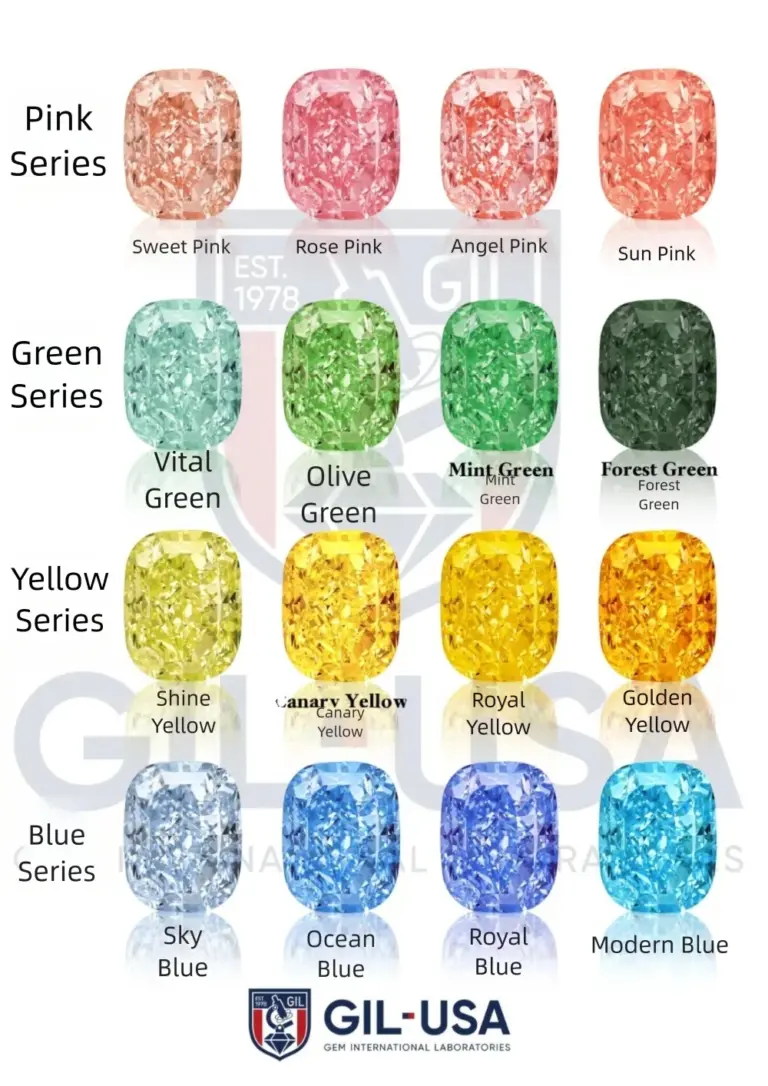
- Launching Product Lines to Avoid Direct Competition: In 2026, De Beers launched its “Desert Diamond” engagement ring collection backed by its highest marketing budget in a decade. Featuring warm champagne and off-white tones, this collection highlights the soft, natural hues unique to mined stones, intentionally differentiating them from the standardized, colorless look of lab-grown products.
- Supply Chain Cuts to Preserve Value: On the supply side, miners are proactively cutting production to insulate themselves from falling lab grown diamond price trends and restricting supply to high-end, authorized retail partners. By eliminating more than half of their small-to-medium distributors, they aim to maintain an exclusive “luxury heritage” persona, stepping away from the mass market entirely.
The Long-Term Outlook of the Diamond Industry
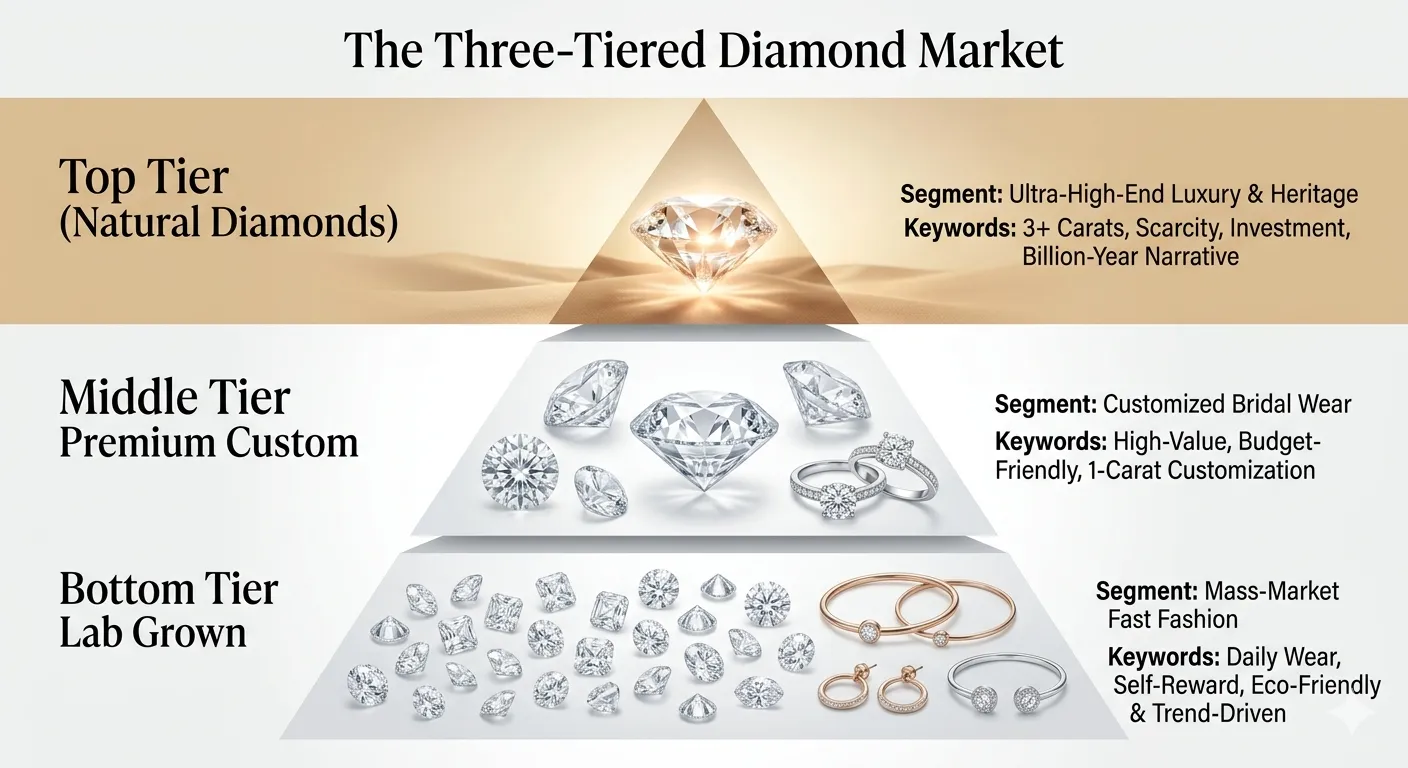
The global market will not return to the era of universal obsession with mined stones. Moving forward, as lab grown diamond price trends continue to stabilize, the market will solidify into a permanent, three-tiered structure: mass-market fashion, premium customized bridal wear, and ultra-high-end luxury investment.