Lab Grown Diamonds vs Lab Grown Gemstones: Why Consumer Realities Differ
When exploring modern jewelry, a fascinating paradox emerges in the market profile of lab grown diamonds vs lab grown gemstones. While eco-conscious and budget-savvy buyers eagerly embrace lab-grown diamonds, synthetic colored stones like rubies, sapphires, and emeralds often face a lukewarm reception.
Why do consumers treat these two lab-created categories so differently? The answer lies deep within buyer psychology, perceived value, and industry trust.
Asset vs. Commodity: The Core Value Logic
The primary divider between lab grown diamonds vs lab grown gemstones is how consumers view their long-term value.
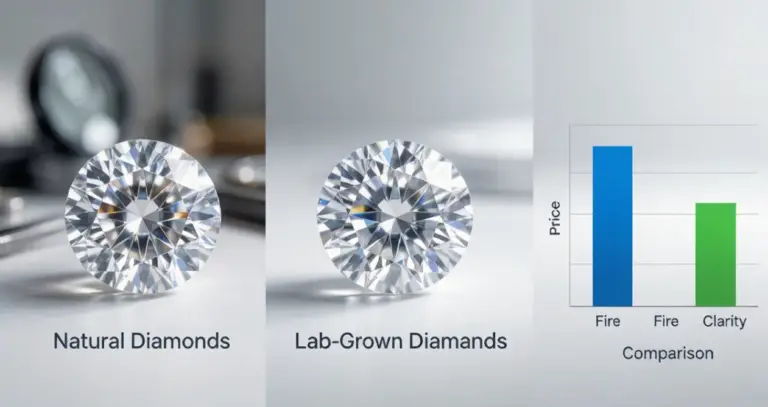
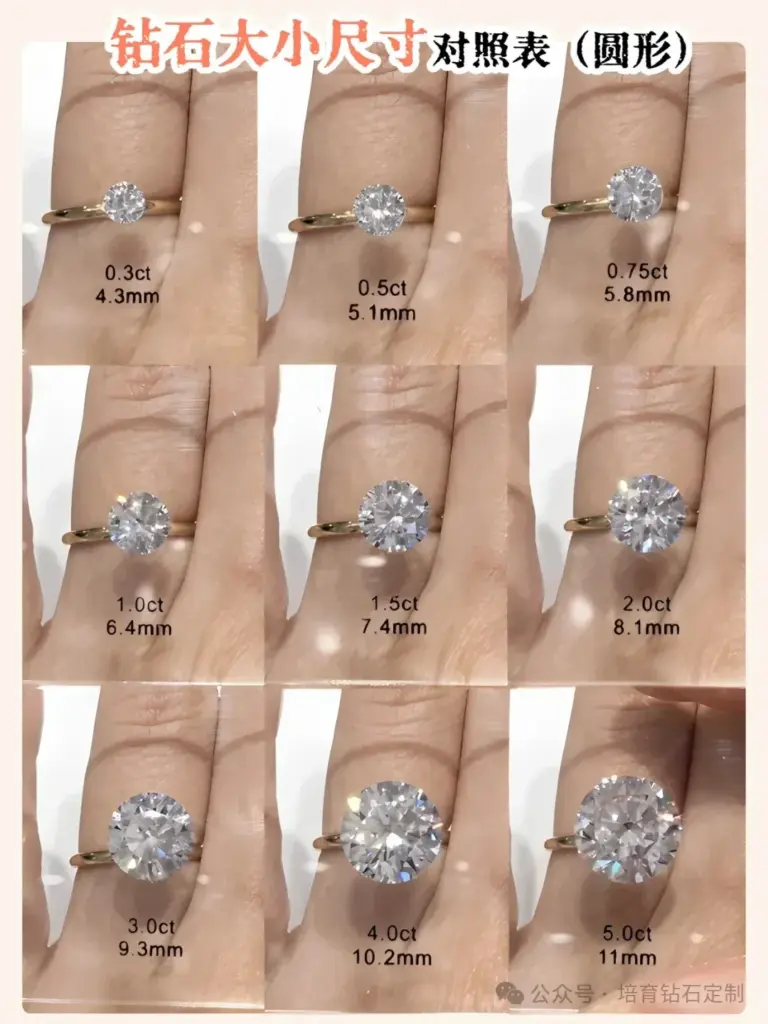
The value proposition of diamonds is built around “standardized luxury.” For over a century, natural diamonds have been successfully marketed to engagement and wedding traditions. Today’s buyers focus on standard metrics: visual brilliance, 4C specifications, and emotional symbolism. As long as it looks identical to a mined diamond, many consumers do not mind if it comes from the earth or a laboratory. Furthermore, because lab-grown diamonds cost only 30% to 50% of their natural counterparts, (Please visit the lab-grown diamond rings section of our website for more details.)they perfectly satisfy the millennial and Gen-Z desire for larger carats on a practical budget.
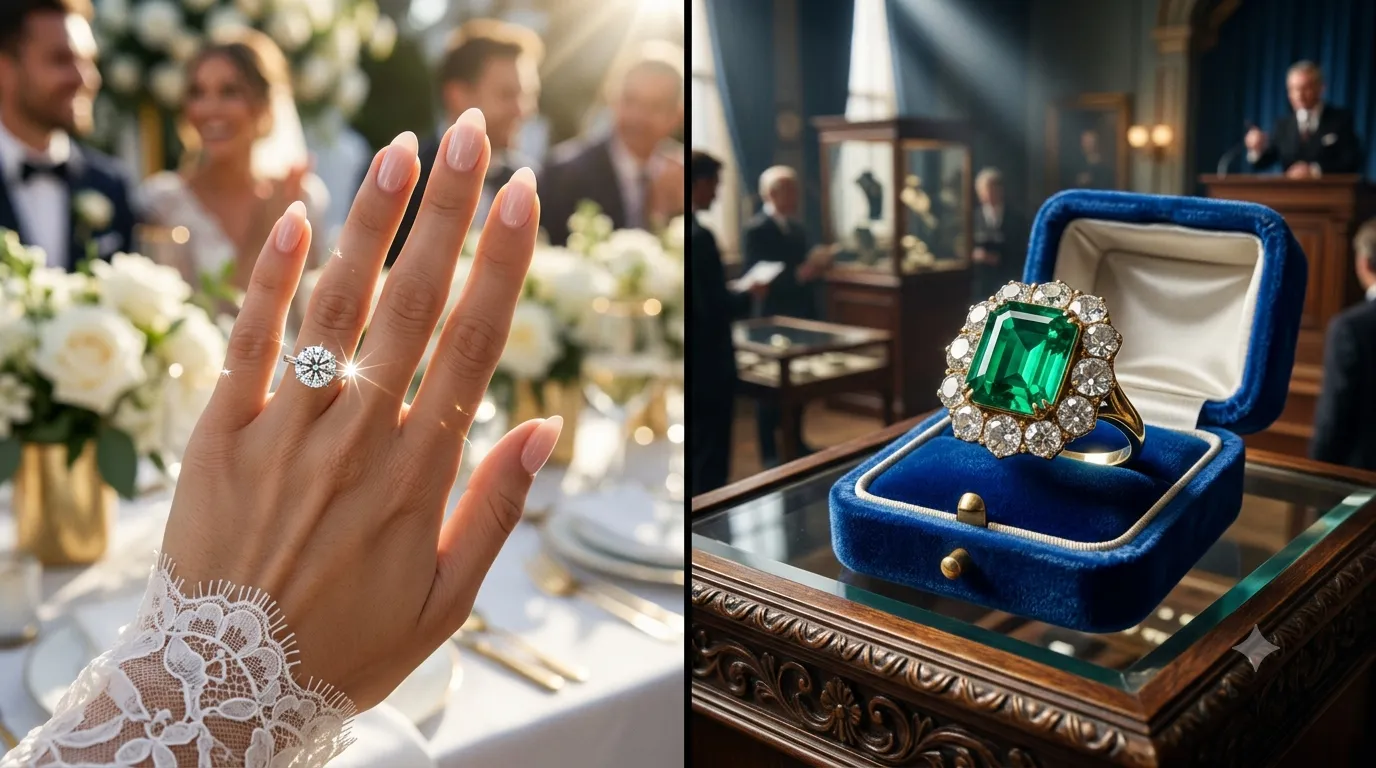
Conversely, the market for colored gemstones thrives on scarcity and geographical uniqueness. The worth of a fine ruby, sapphire, or emerald rests entirely on its rare geological fingerprint. Origins like Burmese Pigeon Blood, Kashmir Blue, or Colombian Muzo Green can dictate massive price premiums. Every color band and inclusion within a natural gemstone serves as a “passport from the Earth,” carrying investment, auction, and heirloom potential. Because laboratory colored stones can be mass-produced infinitely, they lose this essential scarcity. For high-net-worth investors, lab-created colored options lose the very core of their value.
Visual Intuition: Why Flawless Perfection Feels “Fake”
Another crucial factor in the lab grown diamonds vs lab grown gemstones debate is visual expectation.
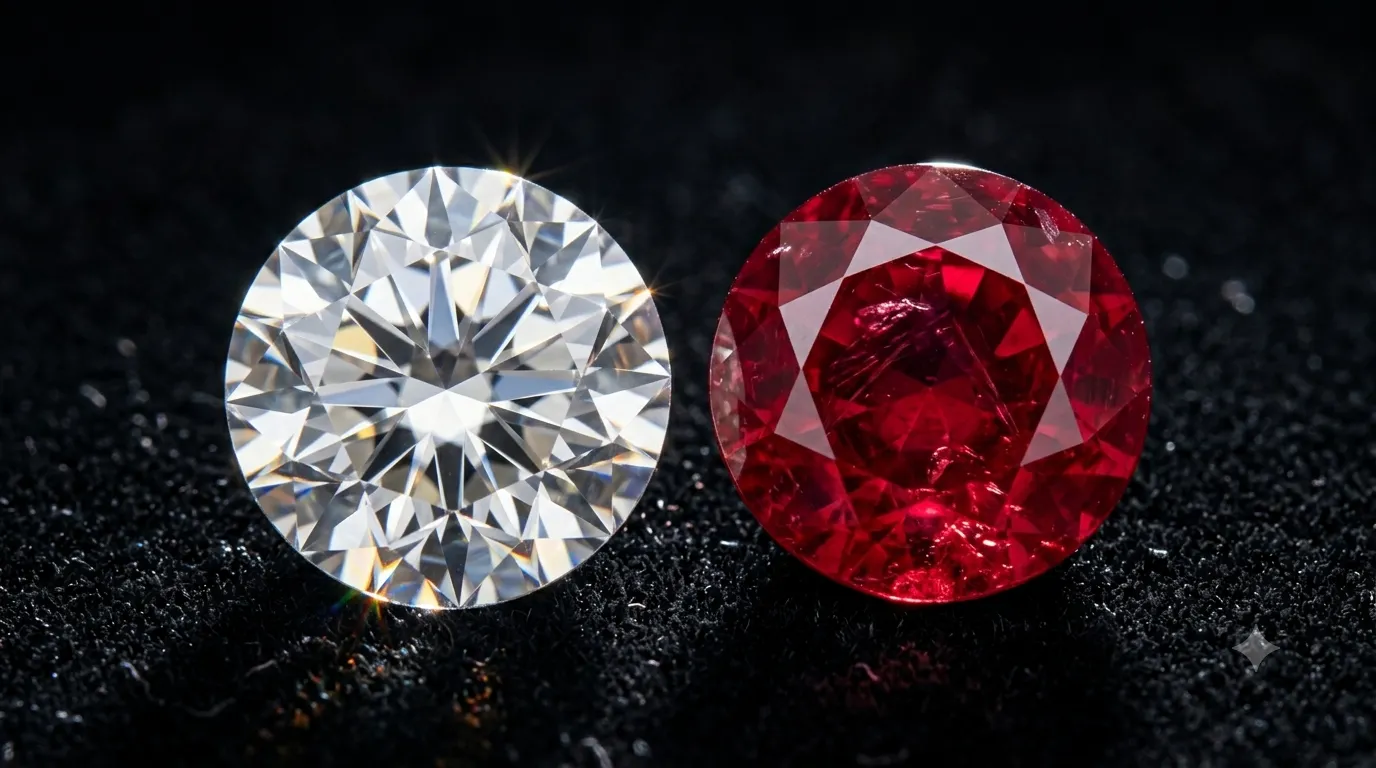
Diamond aesthetics value absolute purity. Natural diamonds are prized for being flawless, and laboratory technology excels at producing crystal-clear, high-clarity diamonds. This flawless look aligns perfectly with public expectations, creating a seamless transition from mined to lab-grown.
Colored gemstone aesthetics, however, embrace natural imperfections. To gemstone connoisseurs, rutile needles in a ruby or three-phase inclusions in an emerald are not flaws—they are proof of nature. In contrast, lab-grown alternatives feature perfectly controlled environments, resulting in hyper-uniform color and sterile clarity. This industrial perfection often backfires, creating a “glassy” or “plasticky” look. This rigid uniformity shatters the organic, lively, and soft visual romance people expect from a real colored gem, making them look instantly artificial.
Industry Standards: Transparent Markets vs. Grey Areas
When comparing lab grown diamonds vs lab grown gemstones, market transparency plays a massive role in consumer trust.
The lab-grown diamond sector operates in a highly mature, structured, and regulated space. Leading gemological institutions like GIA, IGI, and HRD issue dedicated grading reports for lab diamonds. Pricing matrices and trade-in pipelines are transparent, allowing buyers to confidently differentiate between natural diamonds, lab diamonds, and lookalikes like moissanite.
On the flip side, the history of synthetic colored gemstones is clouded by market confusion. For decades, synthetic rubies and sapphires have been misrepresented by unscrupulous vendors to deceive buyers (an issue still rampant in live-stream shopping). This has created a lasting negative stereotype that lab-created colored stones are synonymous with scams. Coupled with the fact that colored gem grading is notoriously complex—involving origin tracking, heat treatments, and oil clarity enhancement—the average shopper feels vulnerable and defaults to avoiding them altogether.
The Price Gap: Premium Alternatives vs. Cheap Imitations
From a consumer psychology standpoint, the scale of a price discount determines how a product is categorized.
With lab-grown diamonds, the 30% to 50% price difference places them comfortably as a premium “affordable alternative” or high-end dupe. It feels like a smart, pragmatic upgrade.
However, the price gap between top-tier natural colored gems and lab-created ones can be a hundredfold. A natural, unheated pigeon-blood ruby can easily fetch tens of thousands of dollars per carat, while its lab-grown counterpart sells for just a few hundred. This extreme pricing canyon triggers a psychological defense mechanism: consumers subconsciously classify the lab-grown gemstone not as a high-tech alternative, but as a cheap imitation.
Summary: Which One Fits Your Jewelry Goals?
Ultimately, how consumers view lab grown diamonds vs lab grown gemstones comes down to the intent behind the purchase:
- For Engagement & Daily Wear: If your goal is a stunning engagement ring or maximizing carat size within a budget, lab-grown diamonds are an exceptional, practical choice.
- For Investment & Family Heirlooms: If you are buying for wealth storage, high-end gifting, or collection value, fine natural colored gemstones remain the undisputed gold standard.
- For Fashion & Color Play: If you simply love a specific color palette for seasonal styling and do not care about resale value, the affordability of lab-created colored stones becomes a major advantage.
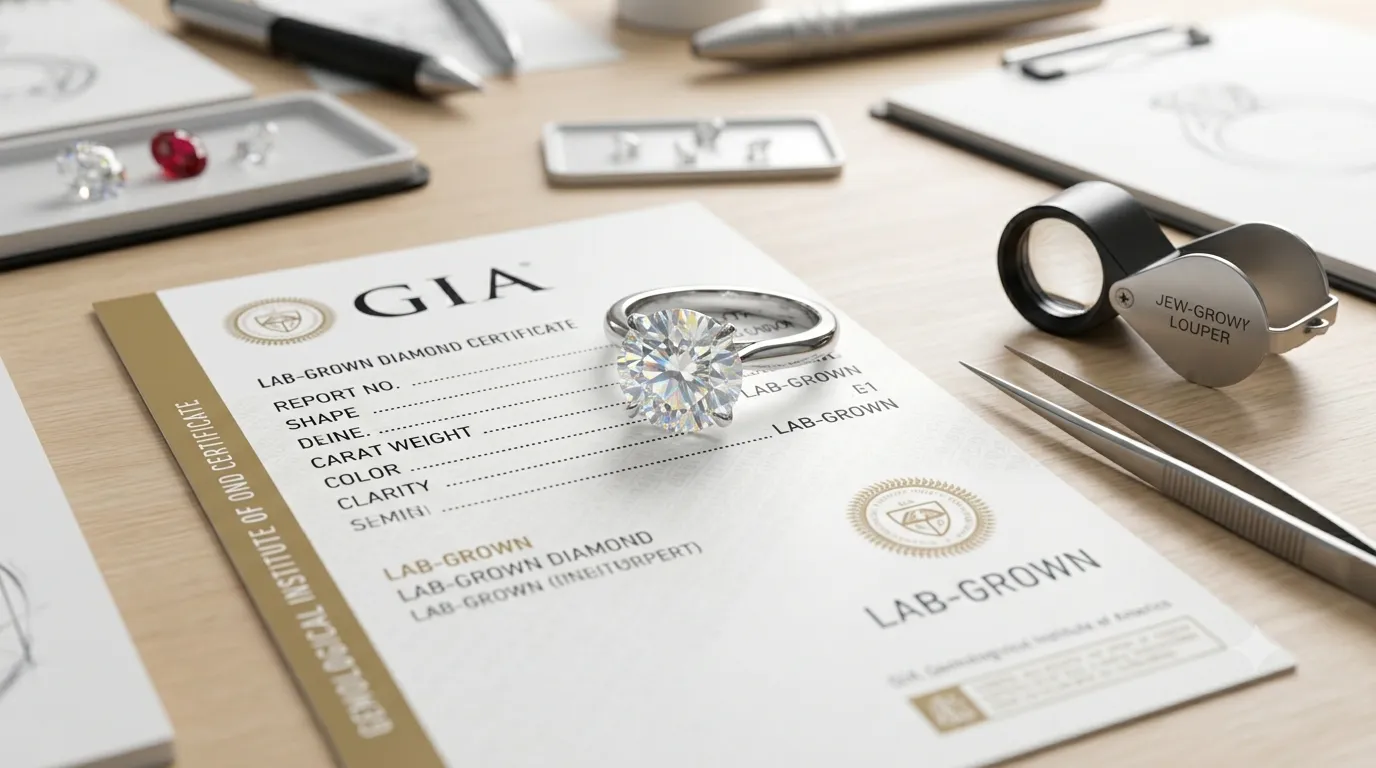
While younger generations increasingly treat diamonds as high-end fashion accessories, premium colored gemstones retain their status as wealth assets. As long as colored gems hold this financial storage function, laboratory technology cannot replace the prestige of natural mines.