Beyond Romance: Why Diamond as a Semiconductor Material is the Future of AI Cooling
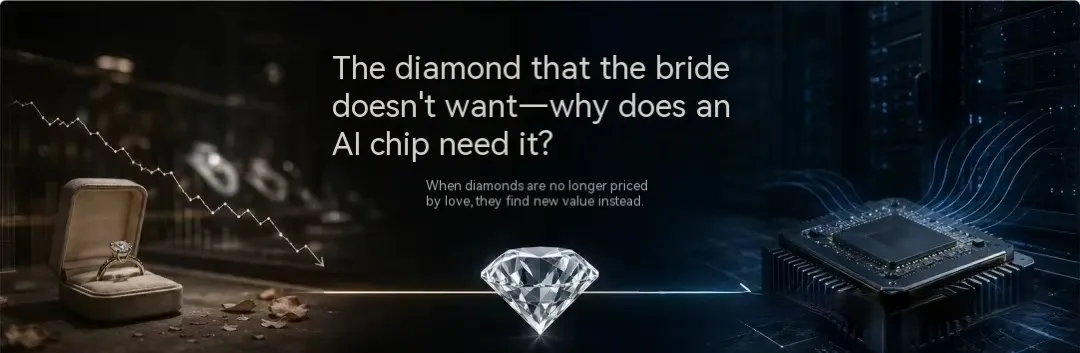
When diamonds are no longer priced by romance, they ironically rediscover their true worth.
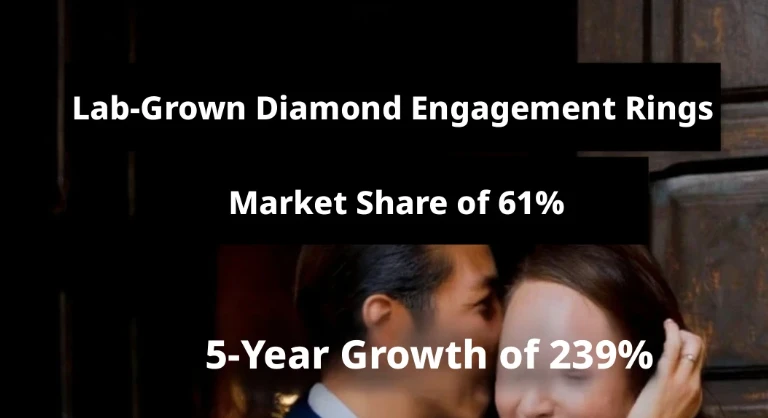
Around 2021, lab-grown diamonds were one of the hottest buzzwords in the jewelry industry.
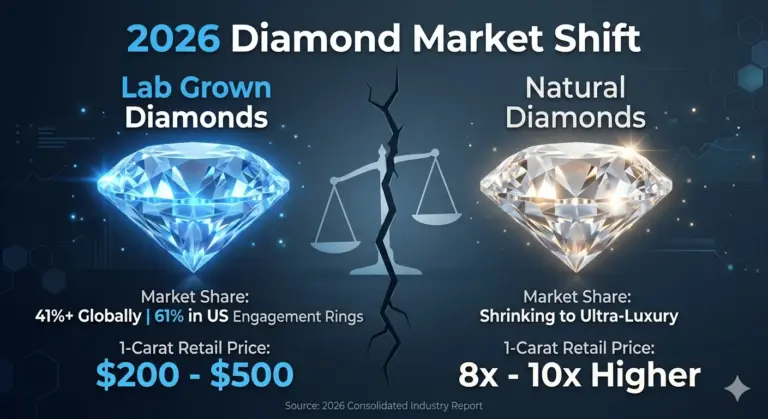
Possessing physical, chemical, and optical properties nearly identical to natural diamonds but at a fraction of the cost, they seemed like a highly rational choice for young consumers. It offered the same carat size for a lower budget, free of ethical controversies.
However, just a few years later, the narrative took a sharp turn.
The consumer jewelry market witnessed a massive price collapse for cultivated gems. Products once marketed as “affordable diamond alternatives” struggled to maintain their narrative of scarcity. Consumers quickly realized that while the upfront savings were real, the continuous price drop was equally real.
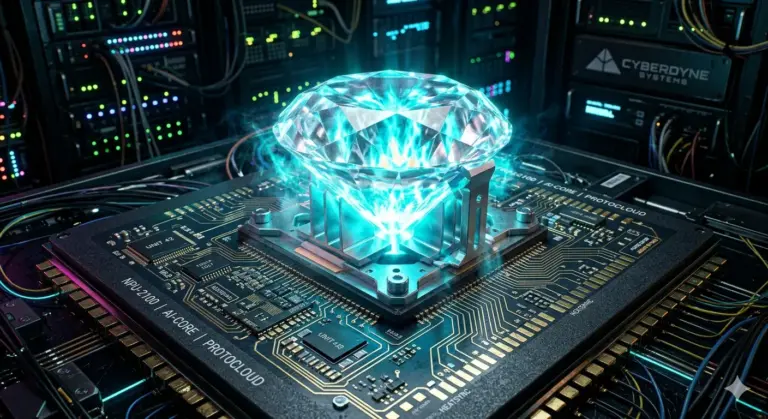
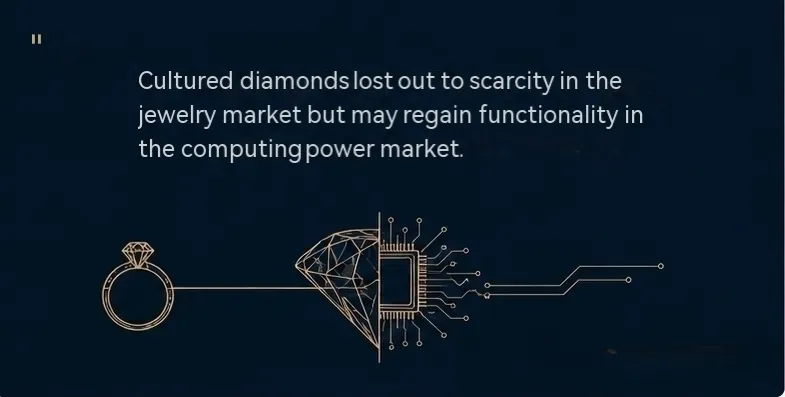
Yet, as this new category lost its luster at the jewelry counter, an entirely different market began to notice it. Not for weddings, not for rings, and certainly not for the “forever love” consumer narrative—but for the critical cooling demands inside AI chips, data centers, and high-power electronic devices.
This marks the most critical pivot for the industry: the transition toward utilizing diamond as a semiconductor material.
The Collapse of the Romantic Myth
Why Lab-Grown Gems Failed to Hold Value in Luxury Retail
The initial rise of lab-grown diamonds in retail was built on a straightforward consumer promise: it looks like a diamond and acts like a diamond, but costs much less.
While this logic worked initially for budget-conscious buyers, the strategy carried the seeds of its own downfall. Natural diamonds maintain their pricing through scarcity, mining heritage, luxury branding, and marriage traditions. Cultivated diamonds borrowed the emotional symbolism of the stone but failed to replicate its scarcity narrative.
Their underlying economic driver isn’t scarcity—it is mass production.
As manufacturing efficiency improved and more players entered the market, the initial competitive edge degenerated into a race to the bottom. For consumers, a critical question emerged: If the “diamond” I buy today can be produced cheaper and faster tomorrow, can it truly hold long-term sentimental value? Consumers didn’t suddenly become unromantic; they simply started recalculating the cost of romance.
The Jewelry Market Penalizes Infinite Supply
Why Low Prices Alone Cannot Build Brand Equity
The dilemma of lab-grown diamonds in retail goes beyond falling prices. More fundamentally, the product entered a market heavily reliant on “irreplaceability” while building its own identity on “replaceability.”
Luxury consumption is never just about raw materials; brand heritage, design language, craftsmanship, and emotional connection define its value. For a new category lacking brand accumulation and relying solely on being “cheaper than natural diamonds,” a drop in price inevitably leads to a drop in consumer trust.
Key Takeaway: Low prices can open a market, but they can rarely establish standalone value.
When placed in a jewelry display case, a product must answer: Why is it worth wearing? What unique aesthetic does it offer? If the answer remains nothing more than a lower price tag, a downward valuation is inevitable.
Industrial Markets Reward Stable Supply
Harnessing Diamond as a Semiconductor Material for Next-Gen Tech
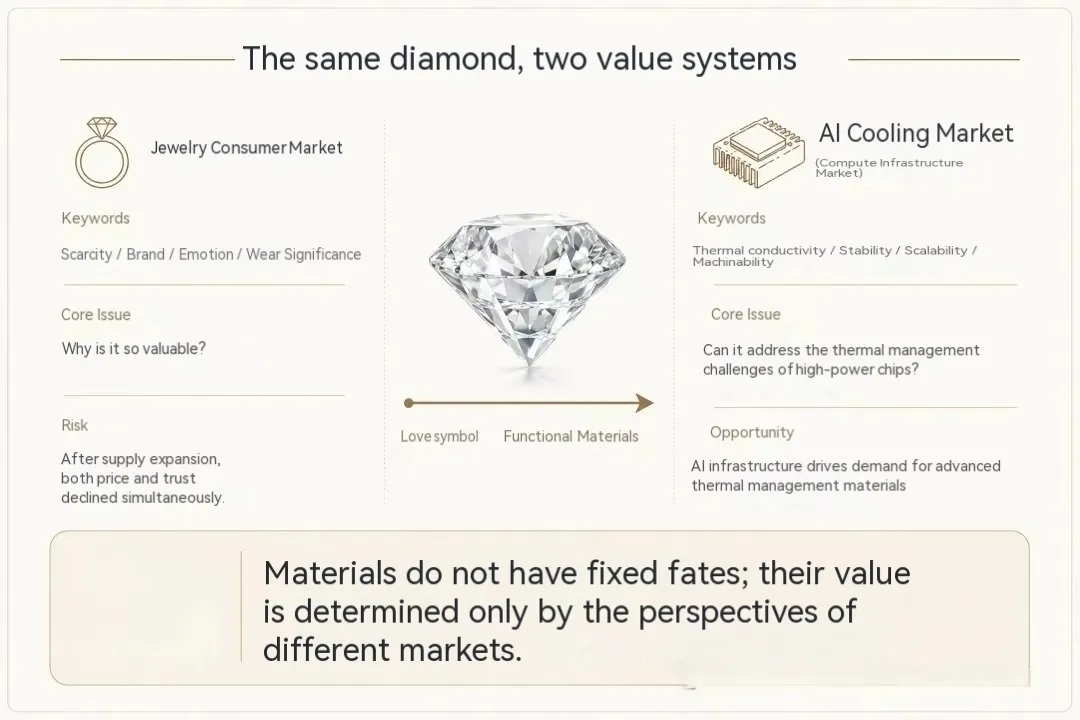
Intriguingly, the exact same manufacturing logic yields the opposite conclusion in the industrial sector. In jewelry, reproducibility is a flaw; in AI chips and high-power electronics, the ability to scale and supply a material consistently is a massive competitive advantage.
As AI model training and inference demands skyrocket, thermal management pressures on chips, servers, and data centers are reaching a breaking point. With hardware systems moving into the era of liquid cooling and rack-level thermal management, the industry is urgently searching for high-performance materials.
This is where the application of diamond as a semiconductor material becomes revolutionary. Renowned for its unparalleled thermal conductivity, electrical insulation, and thermal stability, diamond has long been idealized as the ultimate thermal management substrate for high-power electronics, lasers, RF devices, and advanced semiconductors.
Consequently, the shift from jewelry to computing power is not just a quirky cross-industry anecdote. It represents a fundamental restructuring of how the material is valued.
Beyond the Nvidia Rumors: The Real Material Migration
Why AI Hardware Needs Diamond as a Semiconductor Material
Recent market buzz regarding tech giants like Nvidia and Chinese industrial diamond manufacturers has thrust lab-grown stones back into the spotlight. A material once jilted by the wedding market suddenly being embraced by the AI elite makes for a compelling viral narrative.
However, framing this story merely as “Jensen Huang saving the diamond industry” misses the bigger picture.
The real story isn’t about whether a specific tech giant signed a procurement contract today. The breakthrough lies in the fact that the AI revolution is aggressively pushing materials science, energy, cooling, advanced packaging, and manufacturing to the absolute forefront.
In the past, the public understood diamonds through the lens of luxury retail. In the future, the global tech industry will increasingly view diamond as a semiconductor material vital to data centers. This is not a continuation of a romantic narrative, but a radical revaluation of functional utility.
A Farewell to the Wedding Counter
Realizing the True Industrial Destiny of Synthesized Carbon
Synthesized diamond hasn’t been “saved” by AI; it has simply exited an ecosystem where it didn’t belong and entered one that truly understands its worth.
In the jewelry market, the material struggled to prove why it should be treasured for generations. In the industrial market, its greatest strength is precisely that it can be continuously synthesized, precisely machined, and deployed to meet rigorous performance metrics.
This highlights a brutal yet fascinating truth about materials science: the value of a substance is never inherent to the material itself. Price is entirely dictated by the structural demand of the market it inhabits.
Critical Lessons for the Luxury Industry
Moving Beyond Raw Material Competition
The migration of lab-grown diamonds offers a profound lesson for the broader jewelry industry. It serves as a stark reminder to all brands: materials do not automatically generate luxury value. This is true for natural diamonds, cultivated stones, gold, colored gemstones, and pearls alike.
Materials provide the foundation, but the brand must provide the meaning.
If a product relies solely on its raw material to justify its price, it will eventually be disrupted by cheaper, more efficient, and more transparent supply chains. Only when a brand successfully translates raw elements into proprietary design languages, emotional milestones, cultural symbols, and long-term utility can it escape the trap of pure commodity price wars.
Synthetic diamonds proved they could successfully replicate natural stones, but they failed to prove why they deserved to be cherished as jewelry. The future belongs to those who leverage diamond as a semiconductor material to power the intelligence of tomorrow.