Why Lab-Grown Diamond Price Drops Are Crushing the Moissanite Market
Quick Summary
- The Core Shift: The article moves beyond simple bankruptcy news to analyze a massive structural evolution in the gemstone industry—how unprecedented lab-grown diamond price drops are aggressively compressing the premium market space once dominated by moissanite.
- The Rebranding Trap: It explores the psychological friction consumers experience when a legacy “diamond alternative” brand attempts to pivot upward into selling authentic, high-value lab-grown diamonds, demonstrating that upward brand extension in fine jewelry is monumentally difficult.
- Market Realignment: As true diamonds become highly accessible, moissanite is naturally relocating away from the bridal market to carve out a new identity as an upgraded, high-durability material within the high-volume fashion jewelry sector.
Table of Contents
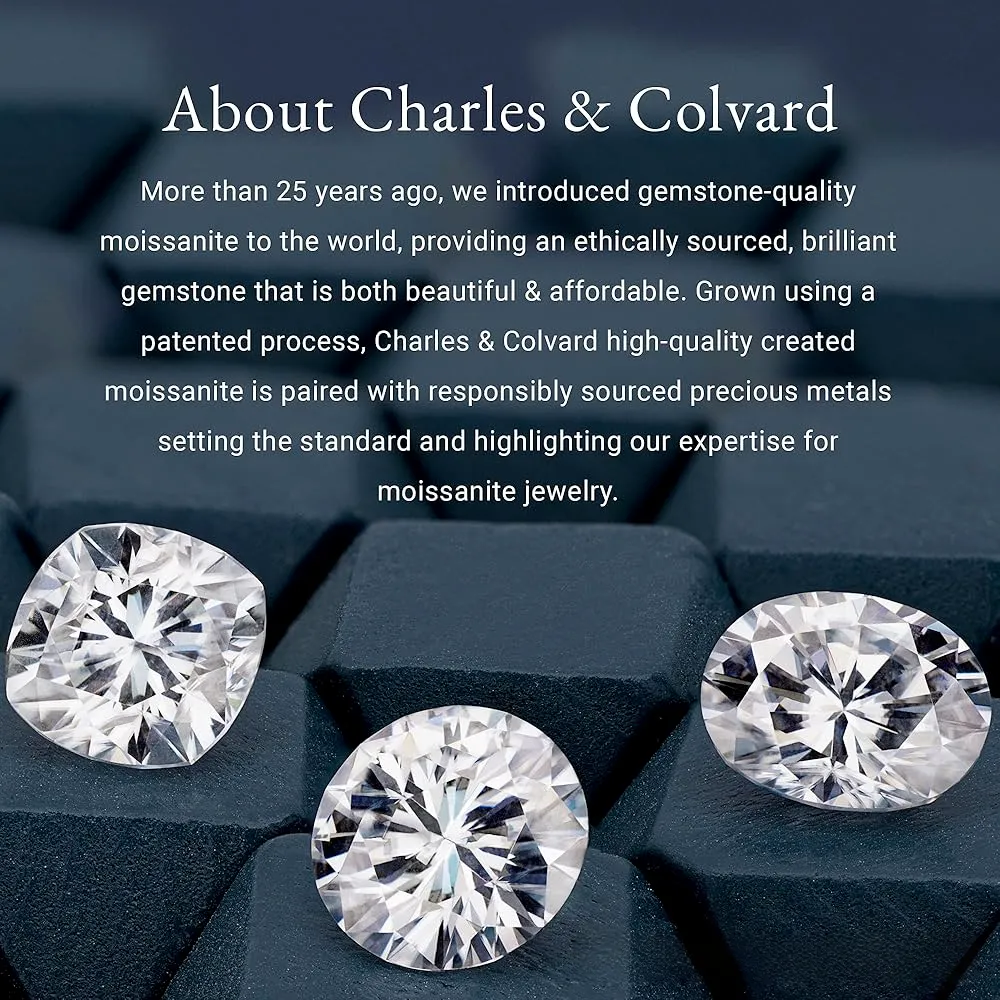
“The shocking reality of the recent [bankruptcy court order approved for Charles & Colvard] has sent a clear wake-up call to the global gemstone industry. When Charles & Colvard (C&C), the legendary pioneer that practically created the modern moissanite market, recently filed for Chapter 11 bankruptcy protection, many jewelers were left scratching their heads. In its official disclosures, C&C explicitly blamed the historic lab grown diamond price drops for its economic collapse.

While some industry insiders argue that lab-created stones are merely being used as a convenient scapegoat for internal operational struggles, looking at this disruption through the lens of macro category competition reveals a much deeper narrative. For decades, the luxury sector has focused exclusively on the clash between “natural vs. lab-grown diamonds.” However, a much quieter but fiercely aggressive battle has been unfolding behind the scenes: the survival of the fittest among man-made gemstones.
The Golden Era: How Moissanite Originally Challenged Natural Diamonds
Capitalizing on the High-End Diamond Alternative Market
Before consumer-grade lab-created diamonds scaled globally, moissanite reigned supreme as the ultimate diamond alternative. Boasting a higher refractive index (brilliance) and fire than a mined diamond, while offering a Mohs hardness of 9.25, it was a massive technological leap forward compared to cheap predecessors like standard glass or cubic zirconia (CZ).
During this era, moissanite brands did not compete against other synthetic gems; they targeted the traditional diamond industry. Legacy marketing campaigns built a highly effective narrative around three core selling points:
- Providing a visual match to a natural gemstone at a fraction of the price.
- Offering a socially responsible, eco-friendly luxury narrative.
- Serving as a direct substitute for premium bridal jewelry and engagement rings.
Essentially, the target demographic for moissanite consisted of consumers who desired the prestige and appearance of a fine diamond ring but were constrained by a strict budget.
Market Evolution: Why Lab Grown Diamond Price Drops Replaced the Premium Substitute
The Ultimate Disruption in the Moissanite vs Lab Grown Diamonds Debate
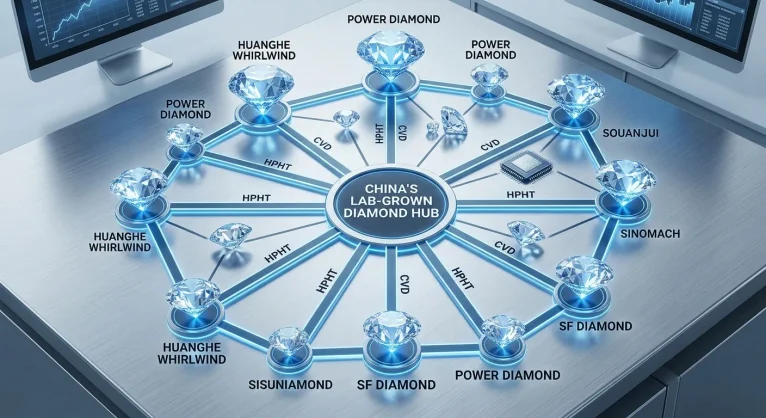
As chemical vapor deposition (CVD) and high-pressure high-temperature (HPHT) manufacturing methods achieved mass efficiency, the fundamental market structure experienced a seismic shift. Lab-grown diamonds brought a definitive advantage to the table: they are chemically, physically, and optically identical to mined stones. They are not simulants; they are actual diamonds.
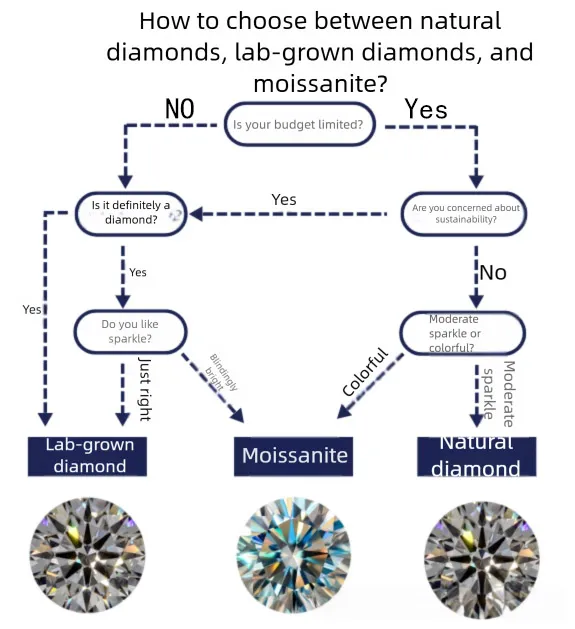
When massive scaling triggered unprecedented lab grown diamond price drops, these real stones directly invaded the exact market space previously occupied by moissanite. Consumers who originally compromised on a simulant because of budget constraints could suddenly afford a real 2-carat or 3-carat lab-created diamond ring for the same price.
The shifting consumer preference created a clear, rigid hierarchy in gemstone market positioning:
| Gemstone Category | Material Attribute | Price Tier | Core Consumer Psychology |
|---|---|---|---|
| Natural Diamond | Mined & Earth-Born, Ultra-Scarce | Premium / Luxury | Emotional Symbolism & Status |
| Lab-Grown Diamond | Real Diamond, Above-Ground Grown | Moderate / Accessible | High Value, Tech-Forward Luxury |
| Moissanite | Diamond Simulant (Silicon Carbide) | Budget-Friendly | Affordable Visual Substitute |
| Cubic Zirconia (CZ) | Synthetic Simulant (Zirconium Dioxide) | Low-Cost | Everyday Fashion Costume Jewelry |
As true diamonds became affordable, the market share for premium moissanite simulants squeezed significantly, proving that a premium substitute can always be substituted by the real thing.
The Rebranding Trap: Why Upward Brand Extension Fails in Fine Jewelry
The Challenge of Shifting from Diamond Alternatives to Genuine Diamonds
Recognizing this structural decline, Charles & Colvard attempted to pivot in recent years by launching its own lab-grown diamond lines. However, ascending the price tier proved to be a monumental branding obstacle.
Brand equity possesses memory, and consumers rarely allow a brand to change its core identity overnight. When a company spends over twenty years establishing itself as the premier destination for “affordable diamond alternatives,” trying to sell authentic luxury diamonds creates cognitive dissonance in the mind of the consumer.
The economic reality of the jewelry market structure dictates a strict downward-only flow for brand stretching:
- Mined Diamond Brands $\rightarrow$ Can easily expand downward to offer lab-grown options.
- Lab-Grown Diamond Brands $\rightarrow$ Struggle to convince consumers to buy multi-thousand-dollar mined pieces from them.
- Moissanite Simulant Brands $\rightarrow$ Face extreme resistance when trying to sell real diamonds, as consumers still perceive them as “fake diamond” sellers.
The New Normal: Moissanite Relocates to the Fashion Jewelry Sector
Scaling Production and the Transition Away from the Bridal Market
While the premium space is now firmly dominated by lab-grown stones, moissanite is far from dead. Instead, the material is undergoing a complete structural evolution.
Driven by advanced automated cutting and mass manufacturing hubs in China, the wholesale cost of raw silicon carbide has plummeted. Consequently, moissanite is actively migrating away from bridal fine jewelry and into the high-volume fashion jewelry market. Within this entry-level tier, its direct competitors are no longer diamonds, but rather:
- High-grade cubic zirconia (CZ)
- Swarovski crystals
- Standard fashion accessory glass
Moissanite is successfully carving out a fresh identity. It is transitioning from a deceptive “diamond substitute” to an upgraded, highly durable “premium fashion crystal.”
Conclusion: Consumer Price Tiers and the Future of Man-Made Gemstones
The unexpected downfall of Charles & Colvard is not merely an isolated case of corporate mismanagement. It is an archetype of how aggressive lab grown diamond price drops can redefine an entire industry supply chain.
For the past decade, jewelry marketing has been obsessed with the loud, public war between natural and cultivated diamonds. Yet, the current fallout proves that the quiet ecosystem war between synthetic materials is just as brutal. In the modern, multi-tiered jewelry market, tech advancements and manufacturing volume will always dictate a product’s final resting place. Survival no longer depends solely on how bright a gemstone sparkles, but on how precisely a brand aligns its pricing strategy with evolving consumer psychology.