What are CVD Lab Grown Diamonds? History, Creation, and Market Trends
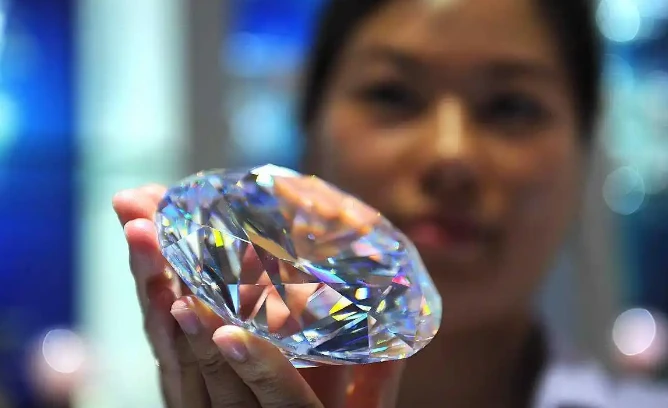
Diamonds are widely recognized as the “King of Gemstones.” As one of the world’s most precious stones, they are cherished for their brilliant luster, unmatched hardness, and unique characteristics.
Beyond their beauty, diamonds are also the hardest and most wear-resistant minerals found in nature. Their exceptional properties—including high thermal conductivity, chemical stability, and semiconductor behavior—make them one of the most versatile and irreplaceable materials in modern industry and technology.
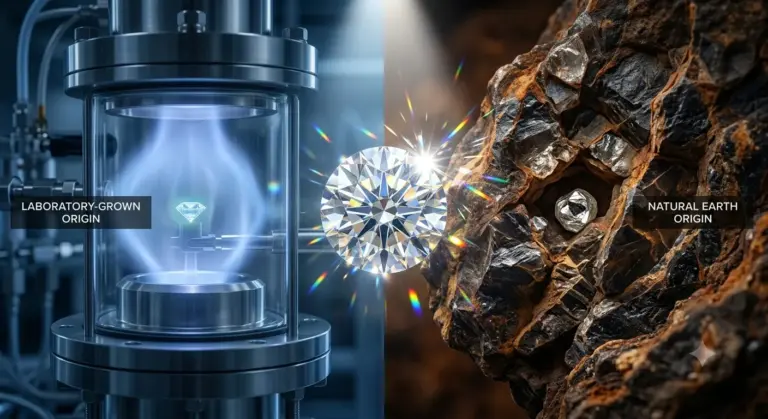
Given the invaluable role of diamonds in both jewelry and industrial applications, and the difficulty of mining natural diamonds, scientists have long sought laboratory methods to produce synthetic alternatives. Today, two primary methods exist to produce diamond rough: High-Pressure High-Temperature (HPHT) and Chemical Vapor Deposition (CVD).
Previously, we published an article titled “The HPHT Lab-Grown Diamond Production Process“, which details the complete production process for HPHT lab-grown diamonds. Those interested can click here to read it. Today, we will dive deep into the history, science, and current status of CVD lab grown diamonds.
What is the CVD Method?
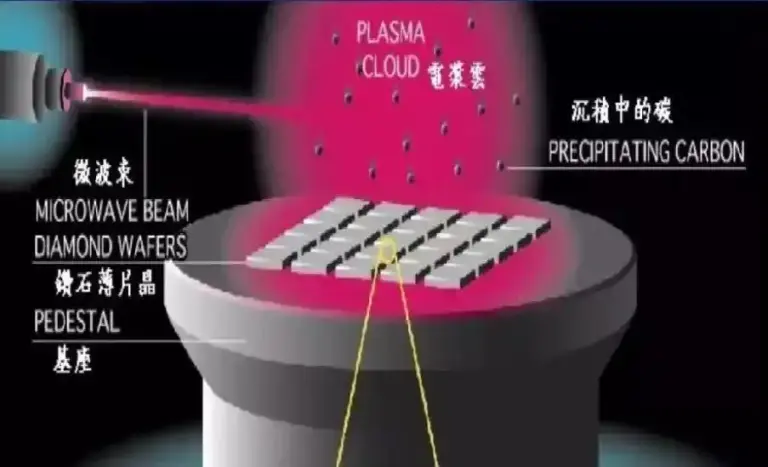
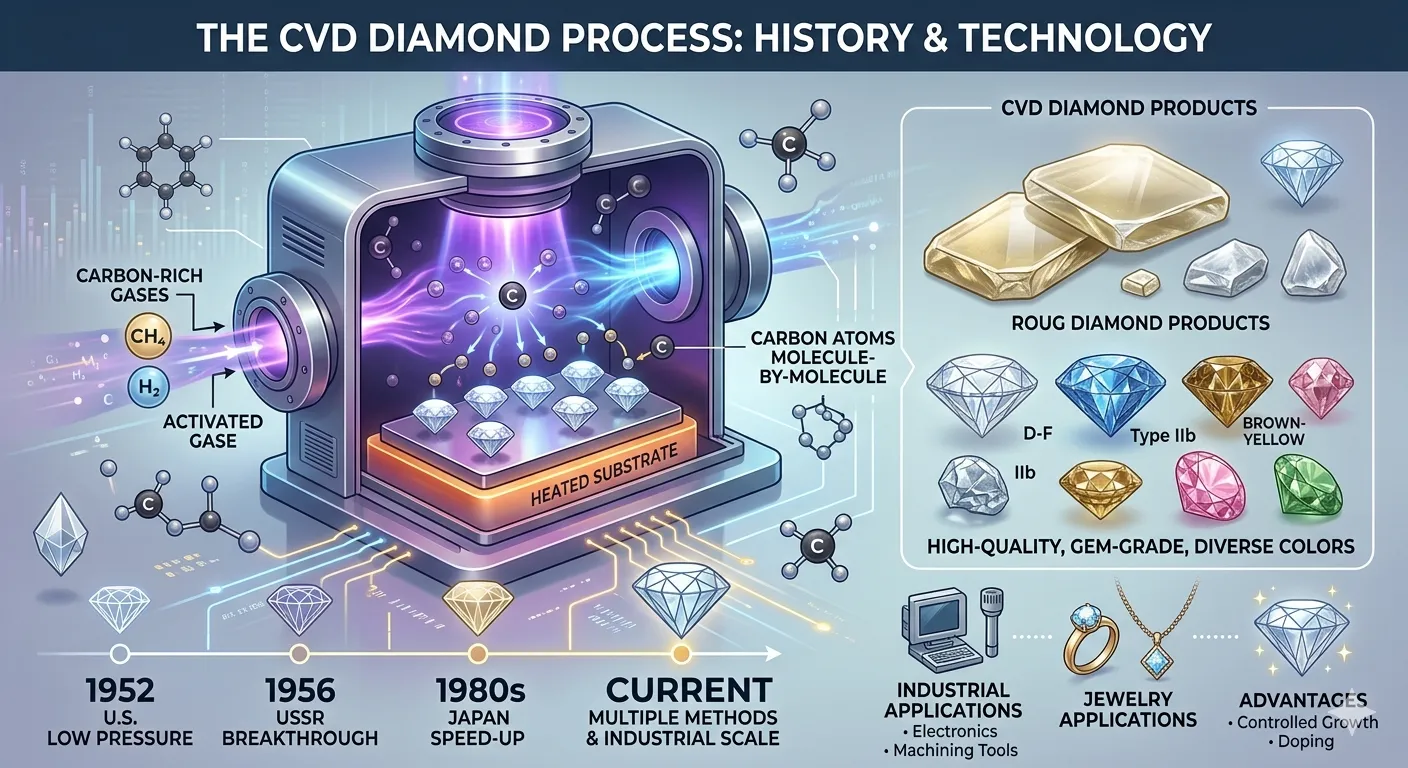
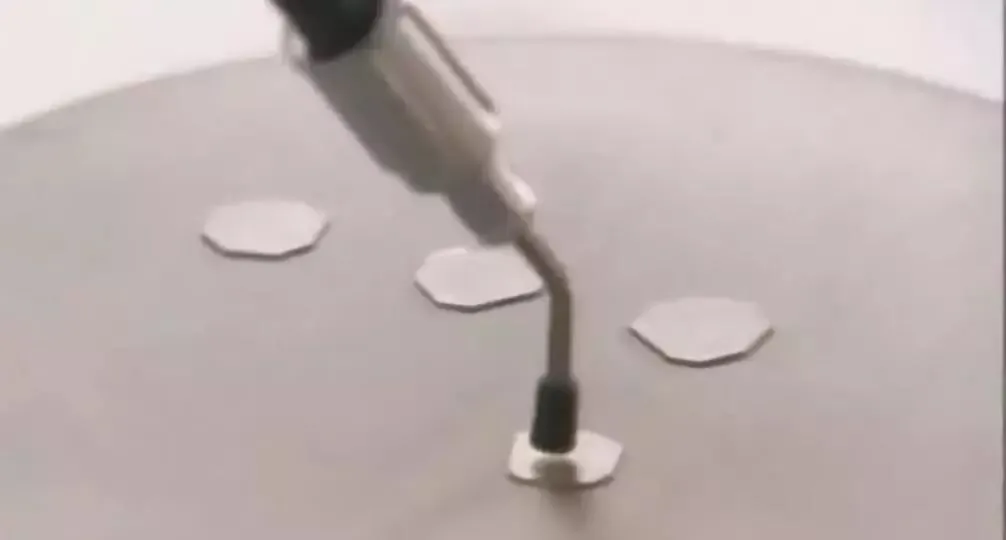
CVD stands for Chemical Vapor Deposition. When we talk about CVD lab grown diamonds, we refer to diamonds grown under relatively low temperatures and pressures. In this process, a carbon-rich gas (such as methane) is activated, causing carbon atoms to deposit molecule-by-molecule onto a diamond seed crystal. This deposition process involves a series of complex gas-phase chemical reactions that allow the diamond to grow.
The History of CVD Lab Grown Diamonds
The history of CVD lab grown diamonds actually predates the HPHT method, tracing back to 1952. At that time, the Federal Silicon Carbide Company in the United States successfully achieved the homozygous epitaxial growth of synthetic diamonds using carbonaceous gases under low-pressure conditions.
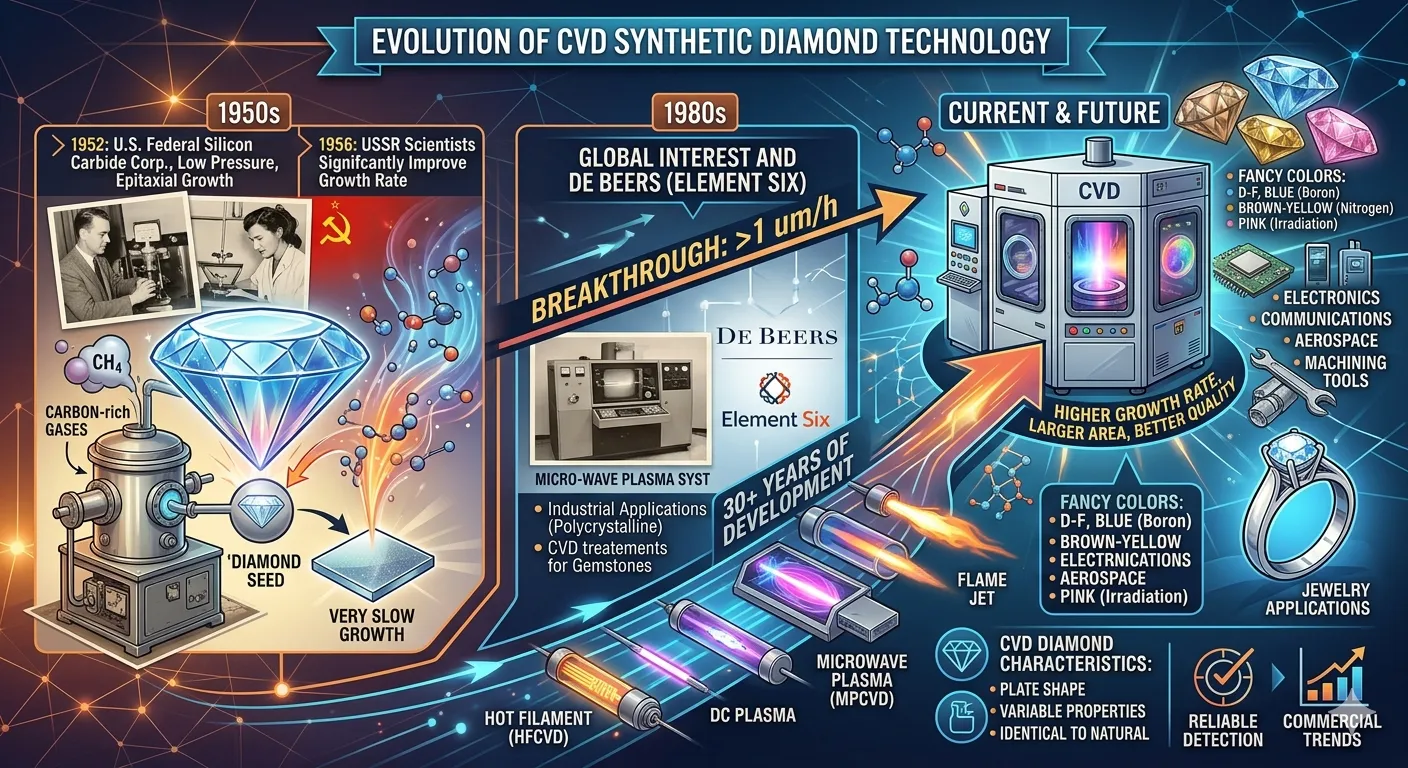
However, the growth rate of early CVD lab-grown diamonds was incredibly slow. People at the time believed the technology could never be accelerated enough for commercial viability.
Everything changed in 1956 when Soviet scientists made significant breakthroughs, drastically increasing the growth rate. By the 1980s, CVD synthesis technology advanced rapidly in Japan, pushing growth speeds past 1 μm/h. This breakthrough sparked global interest in perfecting CVD lab grown diamonds, catching the attention of De Beers, the world’s largest natural diamond producer.
In the late 1980s, De Beers established its Industrial Diamond Division (now Element Six) to research CVD lab grown diamonds. They quickly became leaders in the field, developing numerous polycrystalline CVD products for industrial use. Eventually, this technology crossed over into the jewelry industry, initially used for treating and enhancing natural gemstones and diamonds.
After more than 30 years of global research, the technology behind CVD lab grown diamonds has advanced by leaps and bounds. Today, various preparation methods exist—including Hot Filament CVD (HFCVD), Direct Current (DC) Plasma CVD, Microwave Plasma Chemical Vapor Deposition (MPCVD), and Flame Deposition. Massive progress has been made regarding growth rates, deposition areas, thickness, crystal quality, and diamond purity.
Today, mass production of CVD lab grown diamonds is a reality. Their applications span multiple disciplines, including jewelry, mechanics, building materials, aerospace, electronics, communications, and microwave technologies.
Features and Advantages of CVD Lab Grown Diamonds
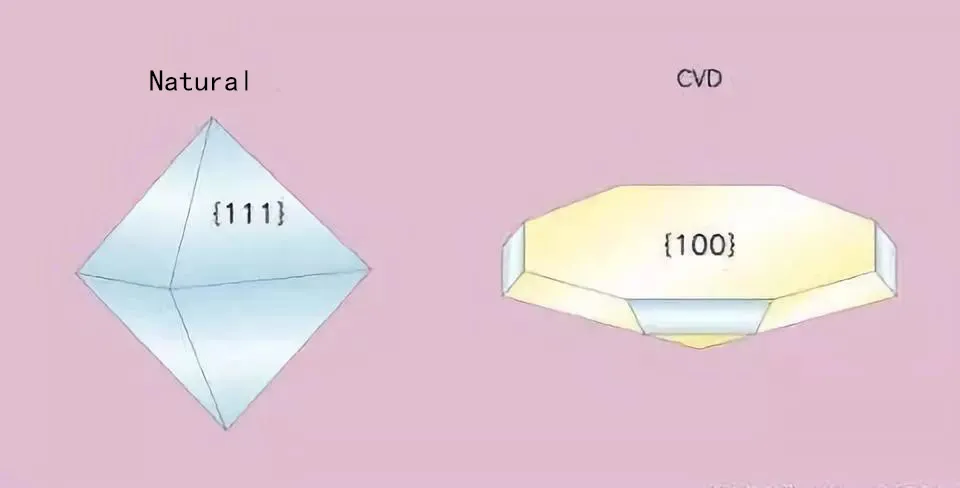
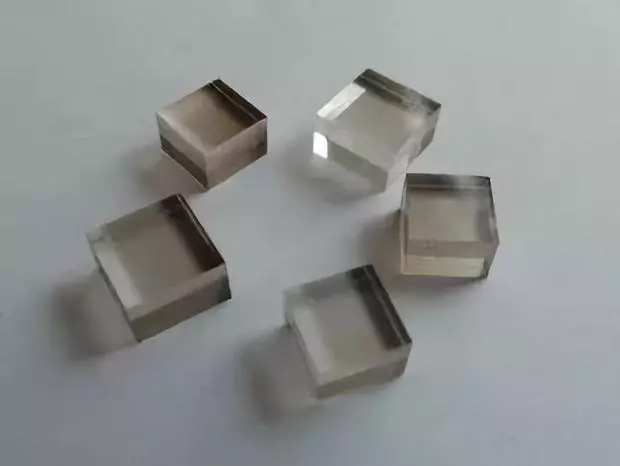
Because CVD lab grown diamonds are formed by carbon atoms depositing layer-by-layer on a substrate, they typically grow in plate-like or tabular shapes. Compared to natural diamonds and HPHT synthetics, the growth process of a CVD lab grown diamond offers a higher degree of control. Scientists can manipulate the deposition process by adjusting the type and amount of trace elements introduced.
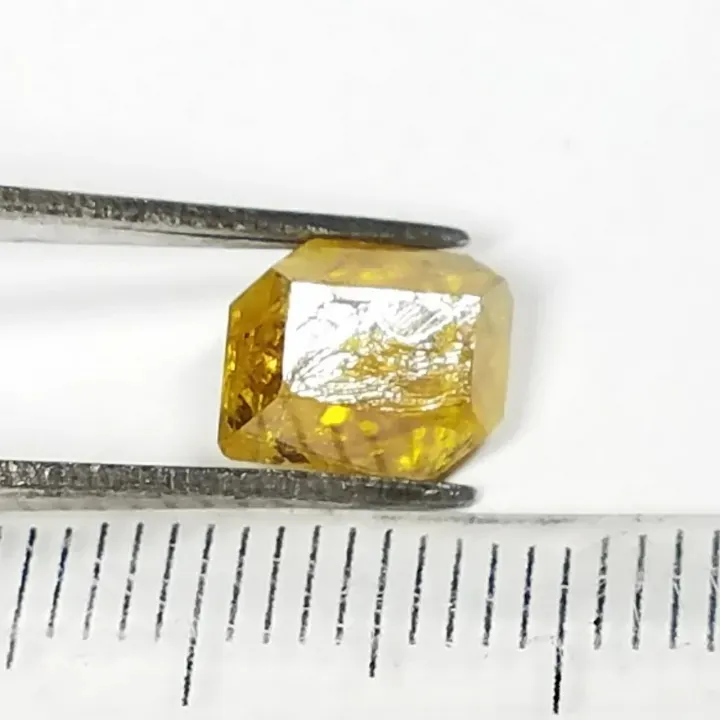
- Color Customization: By adjusting trace amounts of nitrogen (N), scientists can grow CVD lab grown diamonds in various shades of brown and yellow.
- Fancy Colors: Introducing boron (B) yields beautiful blue Type IIb diamonds. Furthermore, subjecting yellowish, nitrogen-bearing CVD diamonds to HPHT annealing can eliminate the brown tint entirely, producing colorless diamonds graded from D to F.
- Advanced Treatments: Irradiation and other multi-step treatments can introduce new structural defects, transforming them into vibrant fancy colors like pink.
Simply put, modern technology can produce CVD lab grown diamonds in virtually any color and in sizes weighing up to dozens of carats. High-quality, gem-grade CVD lab-grown diamonds mirror the exact optical, physical, and chemical traits of natural diamonds—making them completely identical to the naked eye.
Market Reality and the Future
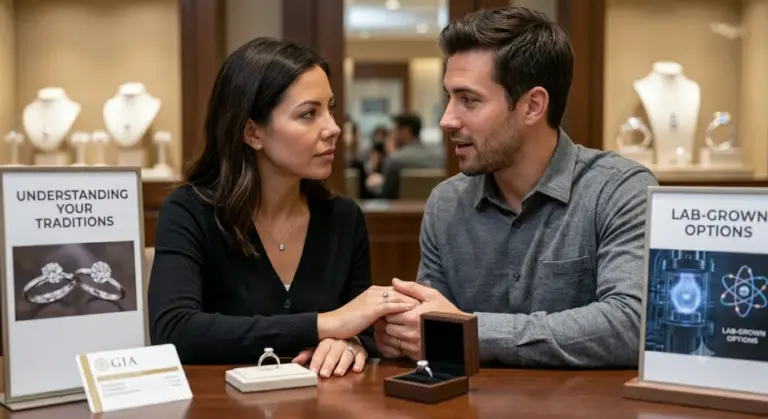
Ideally, the emergence of CVD lab grown diamonds serves as an excellent supplement to the jewelry market, offering consumers more beautiful and affordable choices. However, because a CVD lab grown diamond looks identical to a natural one, some unethical vendors in recent years have secretly mixed them into natural diamond batches without disclosure. This practice has harmed downstream businesses and eroded consumer trust in the jewelry industry.
Fortunately, the commercial production technology for CVD lab grown diamonds is maturing alongside reliable, highly accessible screening and detection tools. Fully disclosing the origin of these stones is the new market standard, allowing this innovative jewelry category to thrive transparently and ethically.